A boat that is perfect for the Fraser River will frustrate you on the Strait of Georgia, and the reverse is just as true. Boating in British Columbia spans more than 25,000 kilometres of coastline, thousands of lakes, and a handful of big silty rivers, and no single hull handles all of it well. This guide covers the main water types, the rules that apply, how the seasons run, and which kind of boat suits which water. We carry both aluminum jet boats and fiberglass coastal boats, so the questions below are the same ones we hear from buyers before they decide.
Coastal Water Is a Different Sport
Most coastal boating from the Lower Mainland happens on four bodies of water, the Strait of Georgia, Howe Sound, Burrard Inlet, and Indian Arm. From there, the Gulf Islands and the Sunshine Coast open up as weekend destinations, and Desolation Sound, roughly 150 kilometres north of Vancouver, is where boats with real range and shelter start earning their keep. Further north again, tidal currents through Seymour Narrows near Campbell River can exceed 10 knots, which is faster than many recreational boats can travel, so passing through at the wrong stage of the tide is not something you recover from.
Conditions are rarely what the water looks like at the dock. The Strait of Georgia can sit flat at breakfast and build two-foot chop once the afternoon westerlies come up, and Howe Sound has a habit of funnelling wind down from the Squamish valley with very little warning. Tides on the BC coast swing more than four metres in places, so the same anchorage can be deep water at noon and a mudflat by supper. You should check the tide tables before every coastal trip, and the boats that cope best with all of this are fiberglass hulls with enough deadrise to cut through chop instead of slamming over it.
The Fraser River and Its Neighbours
The Fraser carries enough glacial silt during the spring and summer freshet to turn the water the colour of milky tea, and the channel does not stay put. Gravel bars that did not exist in June show up in August, side channels close, and the line that worked last year can put you aground this year. Water levels climb with snowmelt in late spring and early summer and drop through late summer, which is why experienced anglers on the lower Fraser, the Harrison River, and the Pitt River treat every trip as a fresh read of the water instead of a repeat of the last one.
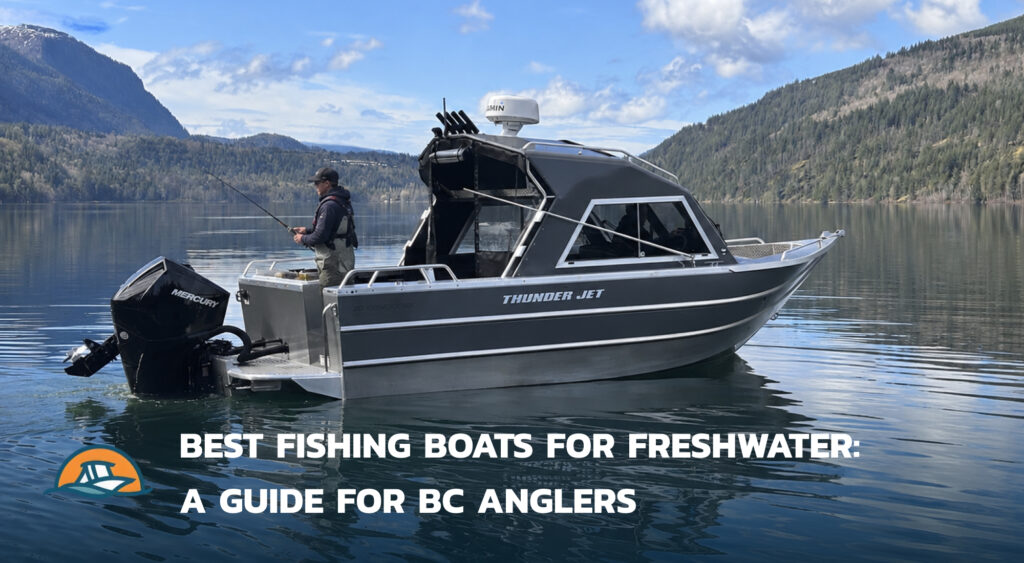
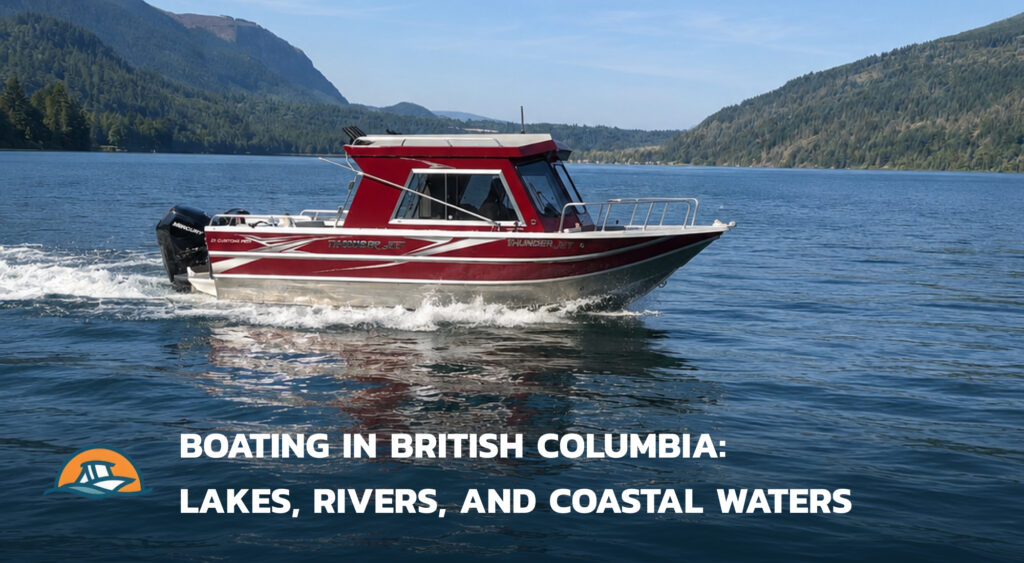
A propeller outboard hangs its lower unit under the hull, and that is exactly the part gravel destroys. A jet drive pulls water through an impeller inside the hull, so the boat can run in roughly 8 to 10 inches of water with nothing exposed below it. That is why welded aluminum jet boats are such a common sight on BC rivers, and it is why we carry a full range of Thunder Jet boats in the Fraser Valley. The trade-off is real, because jet drives burn more fuel and give up some efficiency on deep open water.
Big Lakes Are Not Small Water
Harrison Lake runs about 60 kilometres between steep mountain walls and builds its own wind most afternoons. Pitt Lake, Cultus Lake, and Chilliwack Lake are smaller but follow the same pattern, calm early and lumpy later. You will probably find that a 20-foot boat that felt generous on the river feels small on Harrison by two in the afternoon, and that the difference between a comfortable day and a long wet ride home is mostly beam and hull depth.
Experienced lake anglers choose hull size for the worst afternoon they expect instead of the average one. A modified-V or deep-V aluminum hull with good beam handles chop far better than a flat bottom, and a larger boat also makes a cold October morning easier to tolerate. Size also drives towing, storage, and fuel cost, which is where the choice stops being simple and where many first-time buyers end up compromising.
Licences and Rules You Cannot Skip
Boating falls under federal jurisdiction through Transport Canada. Every powered boat with 10 horsepower or more needs a Pleasure Craft Licence, and every operator needs a Pleasure Craft Operator Card. Licences are now renewed every five years for a $24 fee, so an older lifetime licence may already be out of date. The licence requirements explain both documents and what changed in 2026.
British Columbia adds its own rules on top of the federal ones, and enforcement is real at inspection stations during peak season. The three that catch newcomers most often are listed below.
- Pull the drain plug and drain every water compartment before moving a boat between water bodies, and remove plants, mud, and aquatic organisms from the hull and gear, as required since May 2024.
- Check the speed rules for the specific water, since many BC lakes and rivers limit boats to 10 km/h within 30 metres of shore.
- Do not discharge sewage into inland waters, and carry a holding tank or portable toilet instead.
Fishing Licences Are Separate
British Columbia runs two licensing systems that do not overlap. Freshwater fishing uses the provincial system, and for the 2026-27 season the annual basic licence is $41.15 for BC residents before tax, with higher prices for non-residents. Tidal water falls under Fisheries and Oceans Canada, where the 2026/2027 annual licence is $25.86 for adult residents and $124.41 for non-residents, plus a $7.39 salmon conservation stamp if you plan to keep salmon.
Closures and retention limits change on short notice, particularly for chinook, steelhead, and sturgeon, so read the current notice for your area before every trip. A rule that applied last season may not apply this one. For species, seasons, and where fish are caught, the guide to sport fishing in BC goes deeper than space allows here.
How the Seasons Run
Spring on the coast is cold and changeable, with water temperatures around 8 to 12 degrees Celsius and good chinook and groundfish fishing for anyone willing to put up with westerlies. Summer is the most settled stretch, with July and August the calmest months and the Gulf Islands anchorages at their busiest. Fall brings coho and chum runs and often the best weather of the year in September, before October storms thin out the traffic.
| SEASON | COASTAL BC | FRASER VALLEY RIVERS AND LAKES |
|---|---|---|
| Spring | Changeable weather and cold water. Westerlies build most afternoons. | High water from snowmelt. Gravel bars shift. Sturgeon and spring salmon fishing on the Fraser. |
| Summer | Most settled conditions. Afternoon thermal winds still a factor. | Water drops and bars become more predictable. Sockeye bring heavy traffic in late summer. |
| Fall | Coho and chum runs. September is excellent; October turns rough. | Clearer water and the best river fishing. Jet boats see their heaviest use. |
| Winter | Offshore storms limit open water. Protected inlets stay usable. | Little recreational boating outside steelhead fishing. Most boats in storage. |
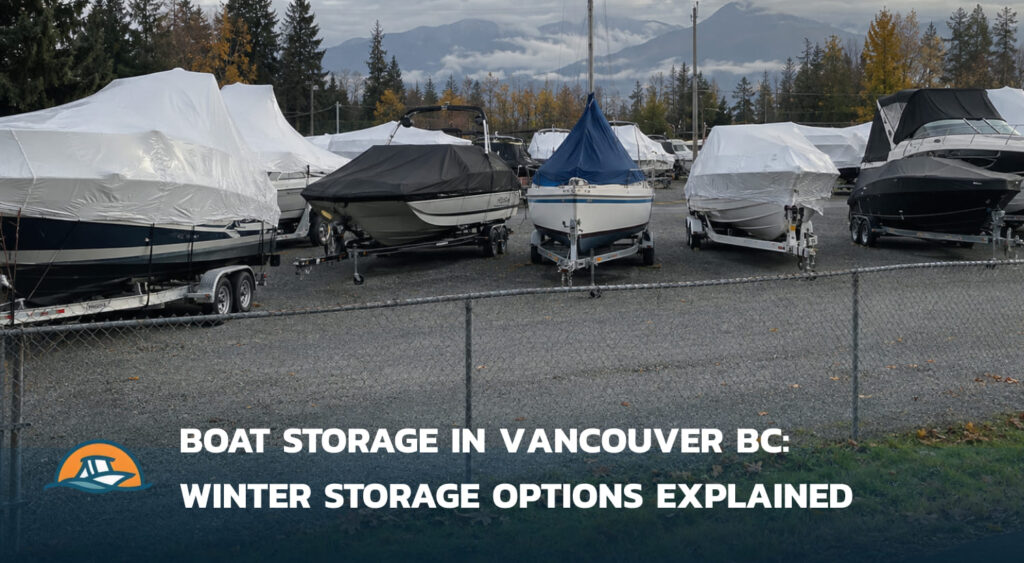
Winter is when most Fraser Valley boats come out of the water, and storage plus preparation decide how the next spring goes. Booking service and storage in September is a better plan than waiting for the first hard frost, because the shops and lots fill on a predictable schedule.
Safety Gear the Regulations Expect
Required equipment varies with vessel length and where you operate. These are the federal minimums for a recreational powerboat, and checking them at the start of every season takes about ten minutes.
- A Canadian-approved lifejacket or personal flotation device for every person aboard, in the correct size.
- A buoyant heaving line at least 15 metres long.
- A bailer or manual pump on boats up to 6 metres, and a manual or powered bilge pump on larger boats.
- A sound signalling device such as a whistle or horn.
- Navigation lights for use after dark or in poor visibility.
- A fire extinguisher on boats with an enclosed compartment or fuel tank.
- In-date flares or other approved distress signals for boats on open coastal water or large lakes.
Flares and lifejackets are the items people forget. Flares expire and expired ones do not count toward the legal requirement, while foam in older lifejackets breaks down quietly. A boat that passes a spot check in April can fail one in October if the flares ran out over the summer.
Matching a Boat to BC Water
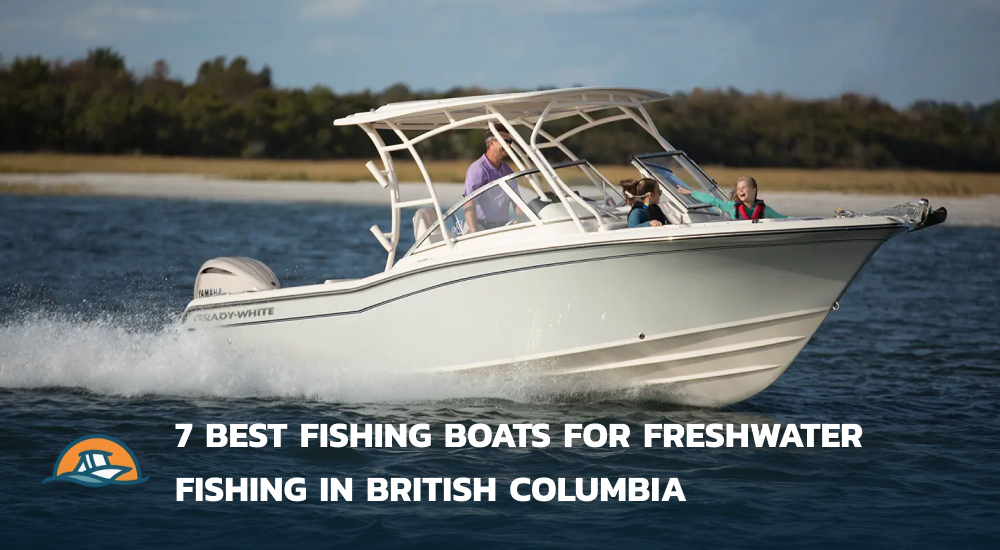
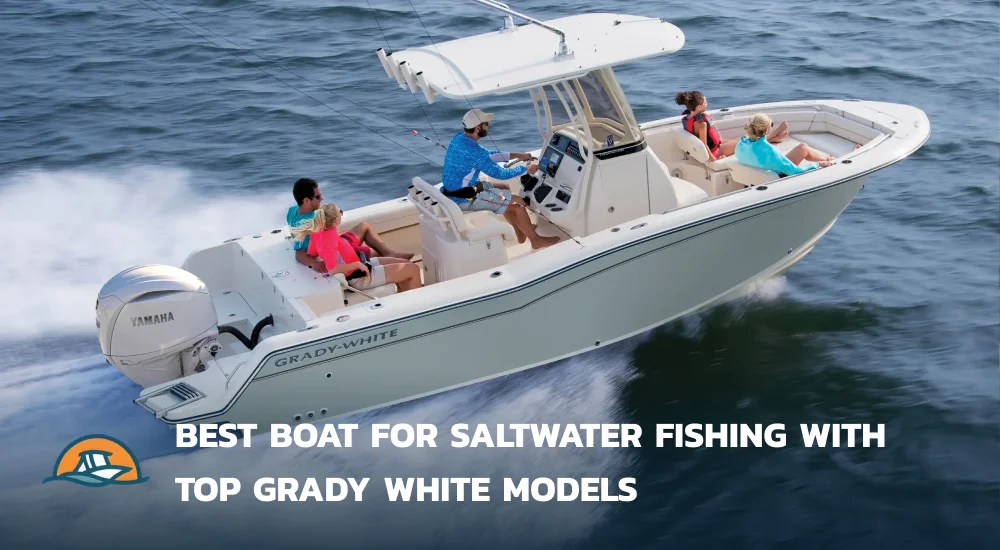
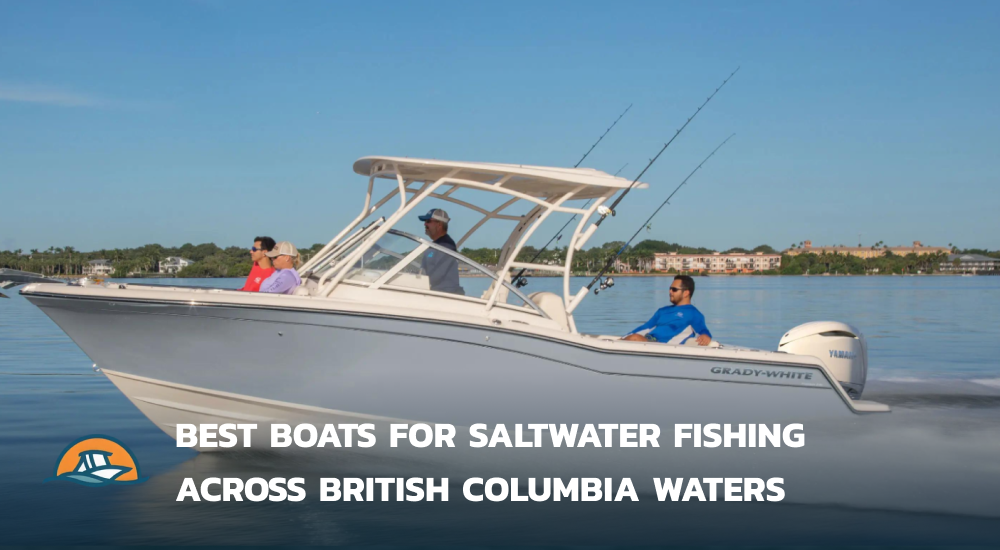
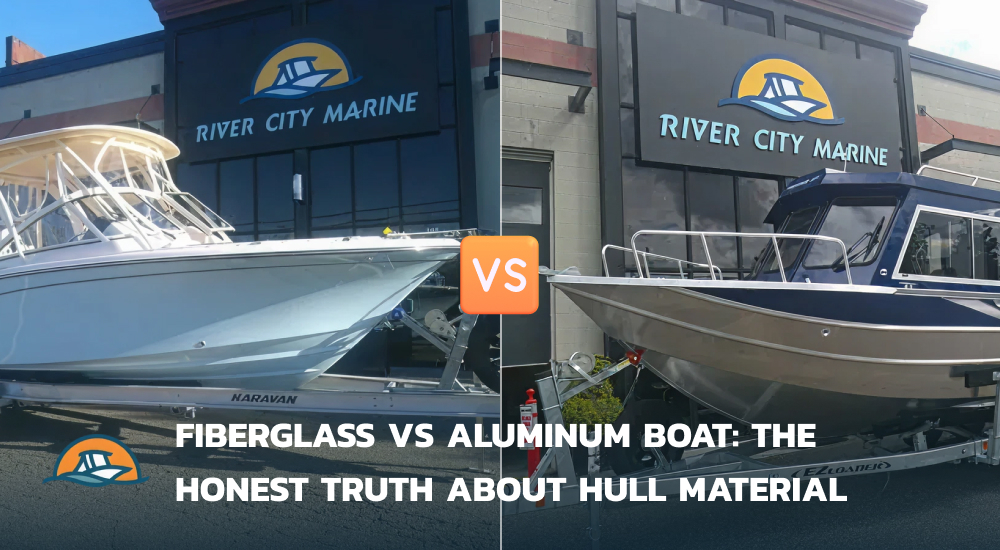
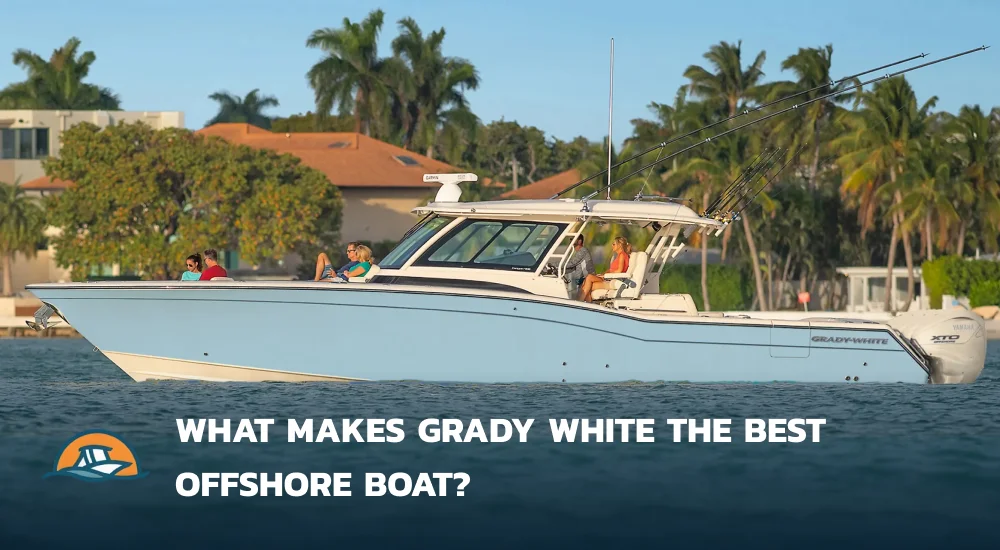
The province splits fairly cleanly into two hull conversations. River and lake anglers on the Fraser system and in the interior usually end up in welded aluminum, often with jet drive, because of the shallow access and the way aluminum shrugs off gravel. Coastal boaters running the Strait and the Gulf Islands usually end up in fiberglass, and we carry Grady-White for that side of the water. A closer look at hull materials sets out the trade-offs between the two.
The awkward buyers are the ones who do both, fishing rivers in fall and cruising the coast in summer. There is no clean answer for them. A shallow river boat is uncomfortable in real coastal chop, and a deep fiberglass hull is a risk over Fraser gravel, so most end up compromising or eventually owning two boats. Whichever way you lean, the ownership costs in BC are worth reading before you commit, since insurance, storage, and service shape what is actually affordable.