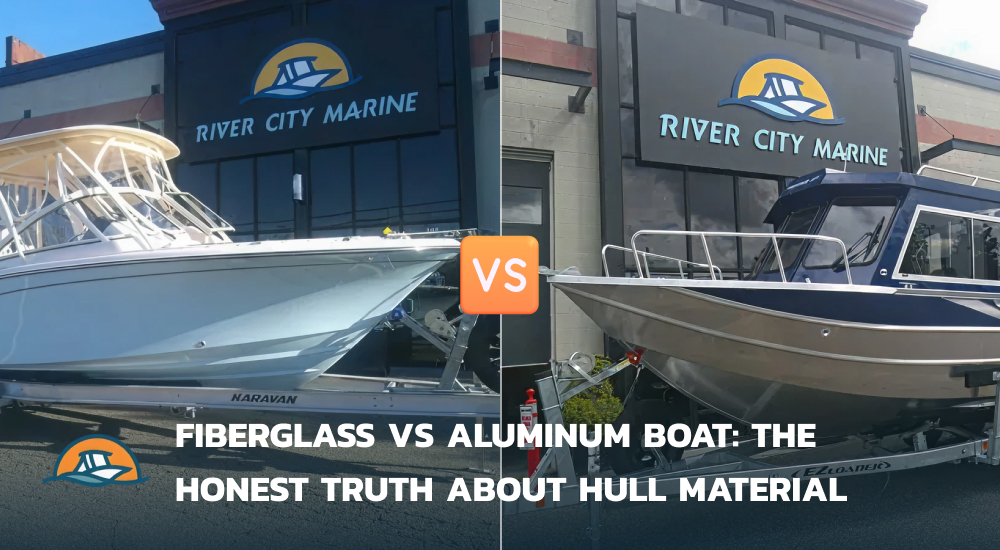
The Real Differences in Fiberglass vs Aluminum Boat Hulls
If you hit a submerged stump in a fiberglass boat, you call your insurance agent. If you hit it in an aluminum boat, you call it a Tuesday. That is the difference we are talking about here.
The fiberglass versus aluminum debate is not about which one looks better at the marina. It’s about physics, repair bills, and whether you can tow your boat with the truck you already own. People spend $60,000 to $150,000 on boats and pick the wrong material because they read generic comparison articles that refuse to give straight answers.
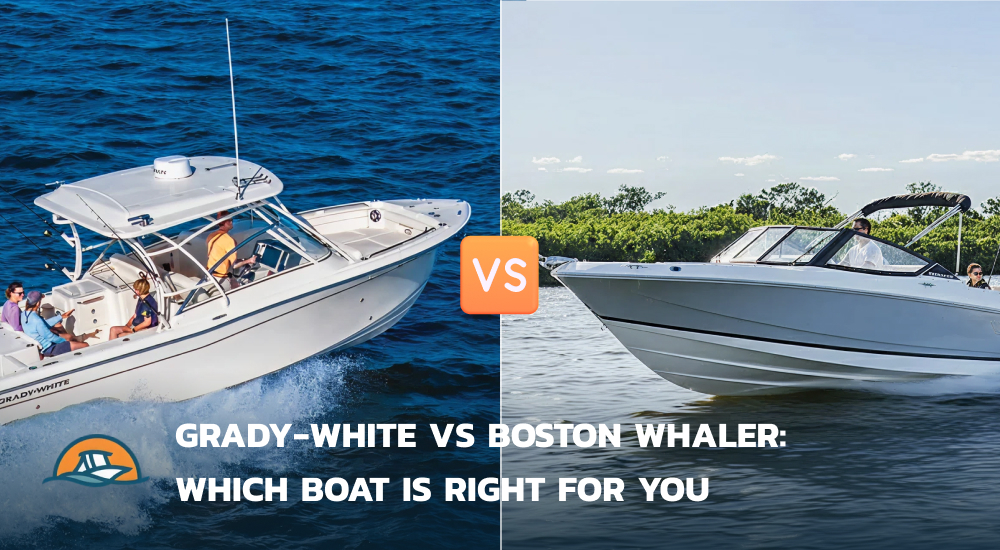
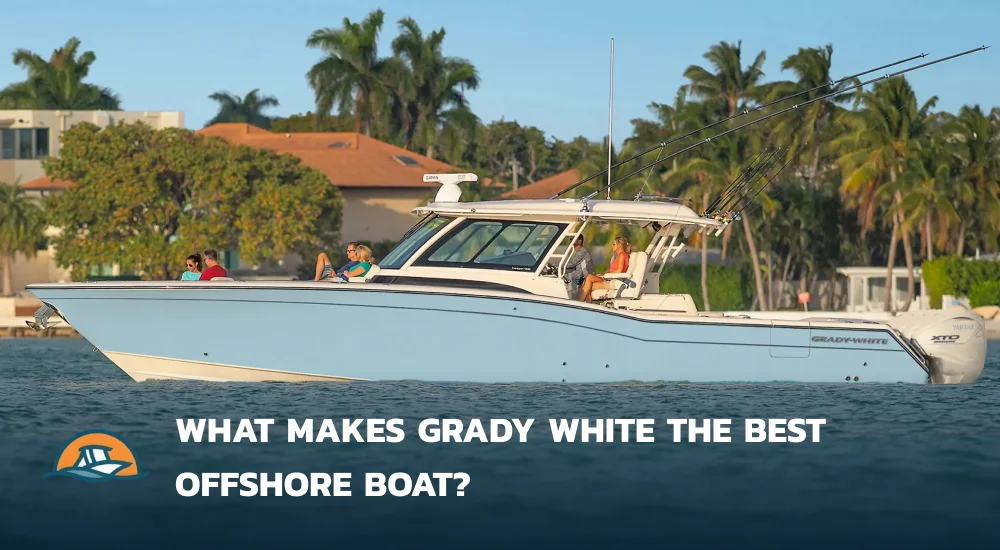
Fiberglass is molded plastic reinforced with glass strands. It allows for complex curves and smooth surfaces. This is why Grady-White boats and other premium fiberglass models can achieve variable deadrise hulls that cut through waves. Aluminum is sheet metal bent or welded into geometric shapes. Light riveted boats use 5052-H34 alloy. Heavy-gauge welded hulls built for serious fishing use 5086-H116, which is stronger and handles saltwater better. If you beach your boat on gravel bars every weekend, fiberglass is the wrong choice. If you want the quietest ride possible, aluminum won’t match fiberglass.
Ride Quality and Sound
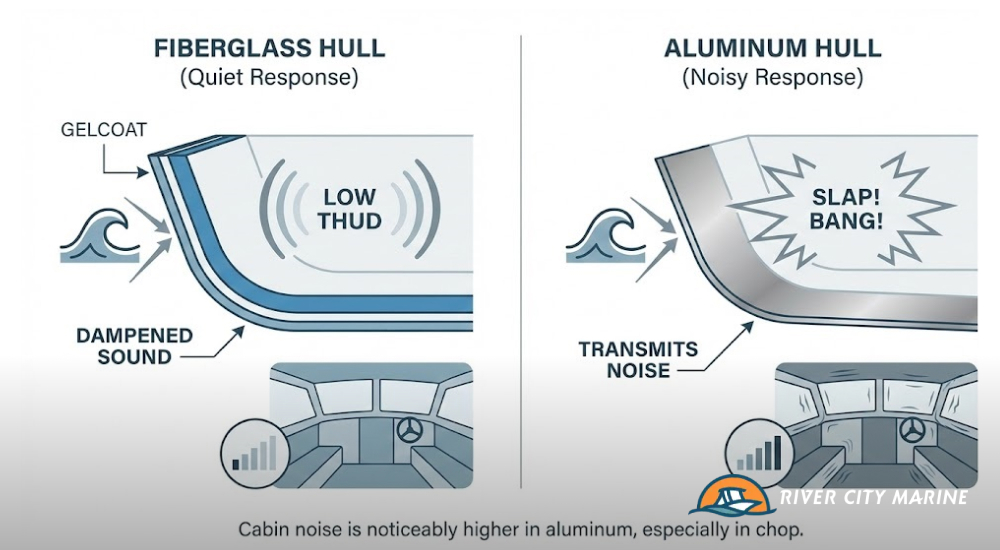
Fiberglass is quiet. The thick gelcoat layer and dense laminate dampen sound. When waves hit the hull, you hear a low thud. Aluminum does produce more noise on the water, and you will notice a difference when running through chop. That said, modern welded aluminum boats have come a long way. Spray-in liner coatings, insulated floor panels, and heavier gauge construction all reduce cabin noise. It is not the same experience as a bare riveted hull from 20 years ago.
The compound curve advantage shows up most when you are running into head seas. A fiberglass deep-V will knife through. The bow flare pushes spray down and out. An aluminum boat with a flat or modified-V bottom will ride rougher in the same conditions. That is where hull design matters more than material. A variable deadrise aluminum hull, like what Thunder Jet builds, will handle head seas much closer to how fiberglass does.
If you spend long days running offshore to Vancouver Island fishing grounds or making the trip from Richmond out to the Gulf Islands, ride comfort matters. How beat up you feel at the end of the day depends more on the specific brand and hull design than just the material alone. A well-built aluminum boat with the right deadrise will ride better than a cheaper fiberglass hull with a flatter bottom. Heavy-gauge welded aluminum boats handle Pacific Northwest waters just fine and are proven in Georgia Strait conditions.
The Rock Test: What Happens When You Hit Something
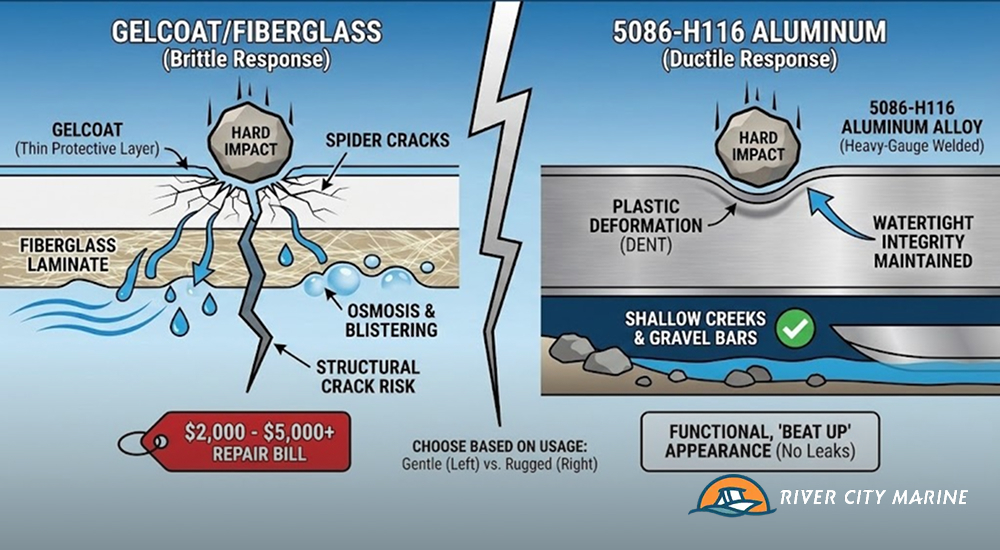
Gelcoat is brittle. It is a thin protective layer over the fiberglass laminate. If you hit a dock hard, it spider cracks. If you grind your hull on a gravel beach, you expose the laminate underneath to water. That starts osmosis, which leads to blistering. A hard impact can crack the entire hull structure. The repair bill runs $2,000 to $5,000, depending on the extent of the damage.
Aluminum dents. It does not shatter. This is called plastic deformation. The metal bends permanently, but the hull stays watertight. You can take an aluminum boat up shallow creeks, bounce off rocks, and drag it across gravel bars. The hull will look beat up, but it will not leak.
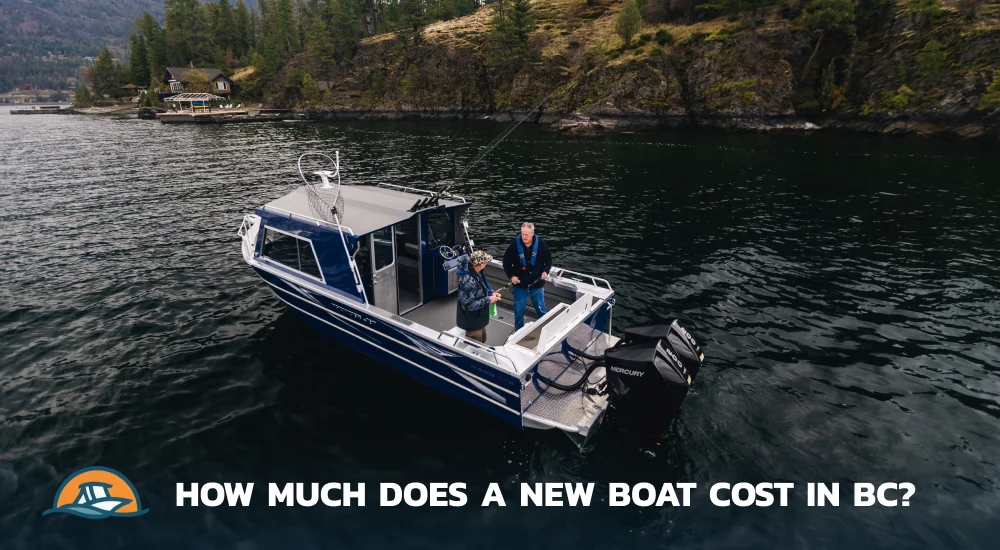
5086-H116 is the standard alloy for heavy-gauge welded aluminum hulls built for serious fishing. It resists corrosion better than lighter grades and has the strength to handle impacts without tearing. If you fish rivers like the Fraser or launch at rocky ramps in the Fraser Valley, aluminum handles it without a second thought. And about 95 percent of the aluminum boats we sell go straight into saltwater and offshore use. These are not just river boats. They run Georgia Strait, Howe Sound, and the Gulf Islands every week. If you baby your boat and stick to deeper water around North Vancouver marinas, fiberglass works fine too.
Head-to-Head Technical Comparison
| FEATURE | FIBERGLASS HULL | ALUMINUM HULL |
| IMPACT RESISTANCE | Low (cracks and chips) | High (dents and scratches) |
| HULL GEOMETRY | Complex (variable deadrise) | Simple to variable (depends on brand, Thunder Jet runs variable deadrise) |
| ACOUSTICS | Quiet (sound-dampening) | Louder (reduced with modern insulation and coatings) |
| MAINTENANCE | High (waxing and polishing gelcoat) | Low (rinse and forget) |
| TOWING WEIGHT | Heavy (requires a larger truck) | Light to moderate (depends on gauge) |
| BEST WATER | Open lakes, oceans, smooth cruising | Saltwater, offshore, rivers, shallow bays, rocky launches |
What Happens After Five Years
Fiberglass oxidizes. The gelcoat turns chalky and fades from glossy white to dull yellow if you do not wax it twice a year. It requires elbow grease. You are out there with a buffer and a rubbing compound every spring. Some people pay detailers $500 to $800 to do it for them.
Aluminum barely ages when used in freshwater. Rinse it off after each trip, and you are done. The hull itself does not oxidize in the same way fiberglass gelcoat does, so there is no compounding or waxing to worry about. After five years of regular use, a well-maintained aluminum hull still looks and performs close to the way it did when it was new.
Who Wins: Usage Scenarios
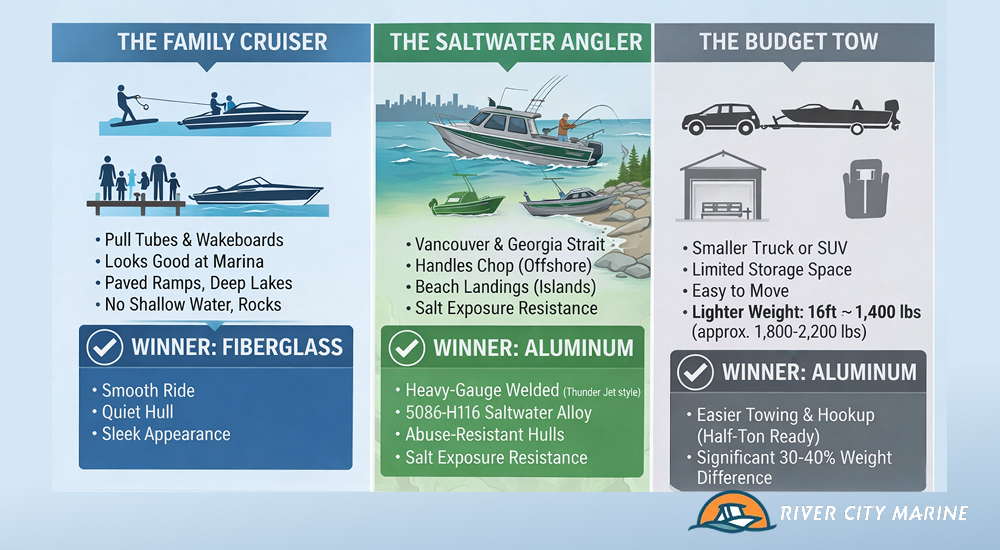
THE FAMILY CRUISER
You pull tubes and wakeboards. You want a boat that looks good at the marina. You launch at paved ramps on deep lakes. You never run in shallow water or hit rocks.
WINNER: Fiberglass. The smooth ride, quiet hull, and sleek appearance matter more than the impact resistance you’ll never need.
THE BUDGET TOW
You have a smaller truck or SUV. You do not want to upgrade your tow vehicle. You have limited storage space and need a boat you can move around easily.
WINNER: Aluminum. A 16-foot aluminum boat on a single-axle trailer weighs around 1,400 pounds. The same-size fiberglass boat weighs 1,800 to 2,200 pounds. That 30 to 40 percent difference matters when you are hooking up to a half-ton truck.
THE SALTWATER ANGLER
You run offshore out of Vancouver, fish the Georgia Strait, or head to the Gulf Islands on weekends. You need a hull that can take a beating from chop, handle beach landings on the islands, and hold up to salt exposure year after year.
WINNER: Aluminum. Heavy-gauge welded boats like Thunder Jet are built for exactly this. The 5086-H116 alloy handles saltwater, and the hulls take abuse that would crack fiberglass gelcoat. Most aluminum boats sold in British Columbia end up running in saltwater.
Why River City Marine Knows Both
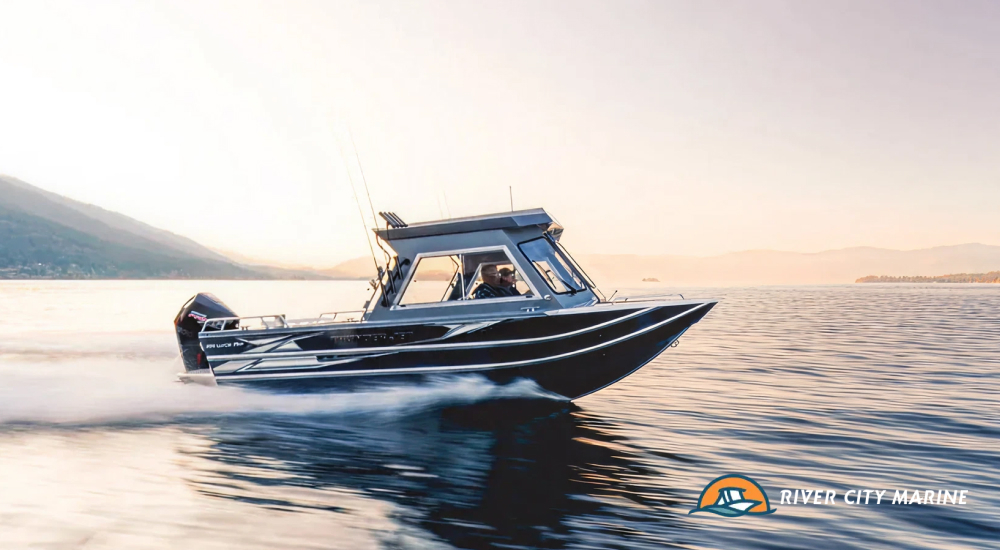
We specialize in heavy-gauge aluminum boats like Thunder Jet and Duckworth. We also service and take trades on fiberglass models regularly. We see what happens when a fiberglass boat hits a rock. We know the repair bill. We also know what an aluminum hull looks like after 10 years of hard use on the coast.
The question is not which material is better. The question is which material fits the water you are actually going to run. Most of our aluminum customers fish saltwater out of Vancouver and run the Georgia Strait every weekend. If you are after the quietest ride on calm lakes, fiberglass has the edge there. But for the mixed conditions most BC boaters deal with, aluminum holds its own and costs less to maintain over time.
Do not guess. Walk the lot. Knock on the hulls. Lift the trailer tongues. Come to our Abbotsford showroom and feel the weight difference yourself. We will match the hull material to the water you fish, not the brochure you read. You can also check out our full inventory of new boats or explore pre-owned options if you want to see the real-world condition of both materials after years of use.
e.