The first thing to clear up about the best boats for shallow water is that the draft number in the brochure is rarely the number that matters. Brochures quote static draft, which is how deep the hull sits when the boat is stopped, unloaded and empty of fuel. The number you need is running draft, which is how deep it sits with you, your gear, a full tank and a passenger aboard, moving. On a shallow hull, the gap between those two figures is routinely four to eight inches, and four inches is the difference between clearing a gravel bar and bending a prop shaft.
Second thing. Shallow water capability is not one feature. It is a hull shape decision and a drive decision, and they are separate. You can put a conventional outboard on the flattest hull built and it will still stop in ten inches of water, because the lower unit hangs well below the keel. Get both halves right and the boat runs where almost nothing else will. Get one right and you own a compromise.
Why Hull Design Matters
A flat-bottom hull displaces the least water for a given weight, so it floats shallower than anything else of the same size. A modified-V has a shallow forward deadrise that tapers nearly flat at the stern, which restores some of the ride quality a flat bottom sacrifices while keeping draft low. A deep-V cuts through chop properly and draws the most water of the three. No hull shape does all three jobs well.
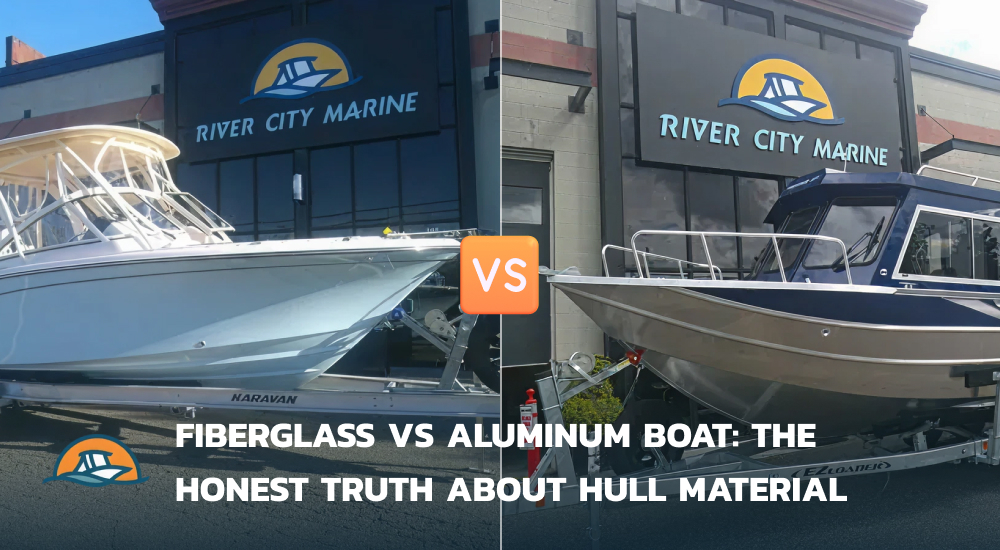
Weight is the second half of hull shape, which is why most purpose-built shallow boats are aluminum rather than fiberglass. A welded aluminum hull of the same length is meaningfully lighter than a comparable fiberglass one, which means it floats higher at rest and gets on plane faster. Aluminum also shrugs off contact with rock and gravel in a way gelcoat does not, which is the real argument in shallow water where contact is not hypothetical. Our comparison of hull material goes through the rest of the trade-off, including what aluminum gives up on ride quality.
Jon Boats for Shallow Water
A jon boat is the simplest shallow water boat there is. Flat bottom, square bow, aluminum, light, and it floats in less water than any other practical hull form. A 16-foot aluminum jon with a small outboard will float in a few inches and run in less than a foot. For river fishing, backwater sloughs, duck hunting and shallow lakes, nothing in the same price bracket comes close.
The trade-off is the ride, and it is not subtle. A flat bottom pounds hard in any chop because there is no deadrise to slice into the water, so every wave transmits straight up through the floor. The high freeboard-to-weight ratio also means wind pushes a jon boat around badly. In open water with a crosswind, you will spend more energy holding a line than fishing. Jon boats are specialist tools and they are excellent inside their specialty.
Tunnel Hull Boats for Shallow Water
A tunnel hull is a flat or modified hull with a recessed channel moulded or welded into the bottom ahead of the motor. The channel funnels water up to a raised propeller, which means the outboard can be mounted four to six inches higher than it otherwise could while still getting clean water to the prop. Raising the motor raises the lowest point on the whole boat, and the lowest point is what grounds you.
Tunnels are a standard factory option on many aluminum jon and utility hulls in the 16 to 20 foot range, not a custom job. A tunnel costs some top speed and some fuel efficiency because the channel disturbs water flow under the hull, and on most of these aluminum hulls the penalty is small enough that owners accept it without much complaint.
Jet Boats for Shallow Rivers
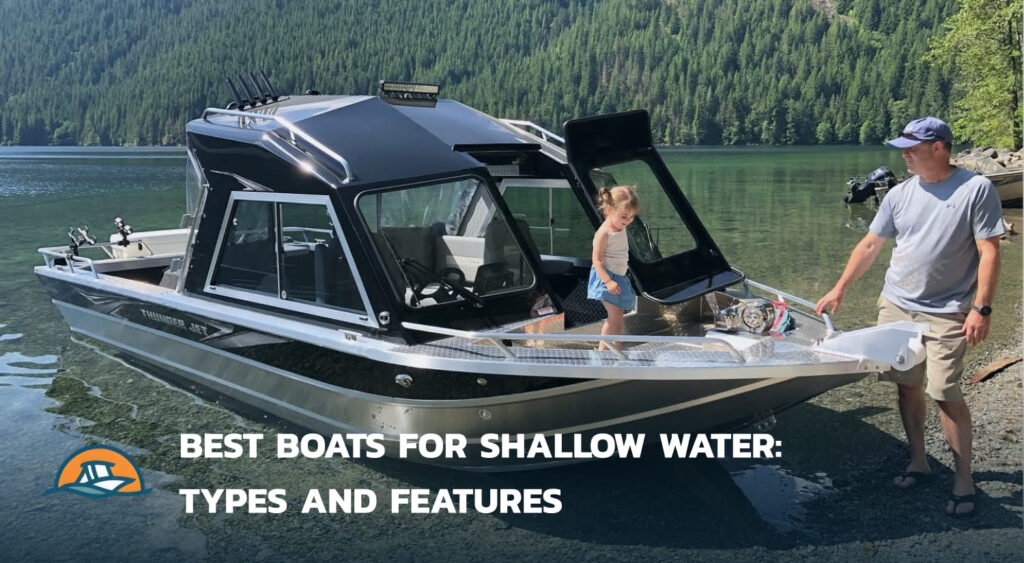
A jet drive handles thinner water than any other drive because it removes the part that usually hits bottom. There is no lower unit, no gearcase, and no propeller hanging below the hull. Water is drawn through an intake flush with the hull bottom, accelerated by an internal impeller and pushed out a steerable nozzle at the transom. The lowest point on the boat becomes the hull itself.
A jet-driven boat will run in eight to ten inches of water, which is shallow enough to cross gravel bars that would end the day for a propped boat.
The costs are specific and worth knowing before you commit. Jets lose roughly 25 to 30 percent of rated horsepower compared with the same powerhead on a prop leg, so you buy more engine to get the same thrust. They are less efficient at low speed and they need the boat moving to steer properly, because steering comes from directed thrust rather than from water flowing over a rudder or skeg. Impellers wear against sand and gravel and need periodic clearance adjustment, so talk to whoever handles your boat service about the service interval before you buy.
Flats Skiffs and Bay Boats
Technical poling skiffs sit at the far end of the category. The lightest float in about six inches and run in less once they are up on plane. They exist to put a fly caster within casting range of fish in water that barely covers their backs, and they are built with almost nothing aboard to achieve it.
Bay boats sit between the skiff and the offshore hull. They draw more than a skiff, usually in the 10 to 14-inch range, and give you back a real console, a windshield, more freeboard and the ability to handle a two-foot chop on the way home. If your water is shallow at one end of the day and open at the other, a bay boat is the compromise that actually functions. A poling skiff in a building afternoon wind is not a comfortable place to be.
Comparing Shallow Water Boat Types
| Type | Typical Running Draft | Rides Chop | Best For | Main Trade-Off |
|---|---|---|---|---|
| Jon Boat | 6 to 10 in | Poorly | Rivers, sloughs, small lakes, hunting | Pounds hard, blows around in wind |
| Tunnel Hull | 8 to 12 in | Fair | Shallow bays, river systems, flats | Loses some speed and fuel economy |
| Jet Drive | 8 to 10 in | Depends on hull | Gravel-bottom rivers, rapids, rock | 25 to 30% power loss, impeller wear |
| Flats Skiff | 3 to 6 in | Poorly | Poling and sight fishing | Minimal capacity and freeboard |
| Bay Boat | 10 to 14 in | Well | Mixed shallow and open water | Not a true shallow specialist |
| Modified-V Aluminum | 12 to 18 in | Well | General freshwater and estuaries | Draws too much for true flats |
Read that table against the shallowest water you actually intend to run, not the shallowest water you can imagine running. Most buyers over-specify shallow capability and then spend ninety percent of their hours in water deep enough for a conventional hull, paying for it in ride quality every single trip.
The Trade-Offs of Shallow Draft
Every inch of draft you give up is paid for somewhere. Shallower hulls have less deadrise, so they ride rougher. They have less freeboard for their length, so they take spray earlier and feel less secure in a seaway. They carry less weight before the draft advantage disappears, which matters more than people expect once you load four adults, a full tank, a cooler and gear. They track worse in a crosswind because there is less hull in the water to resist being pushed.
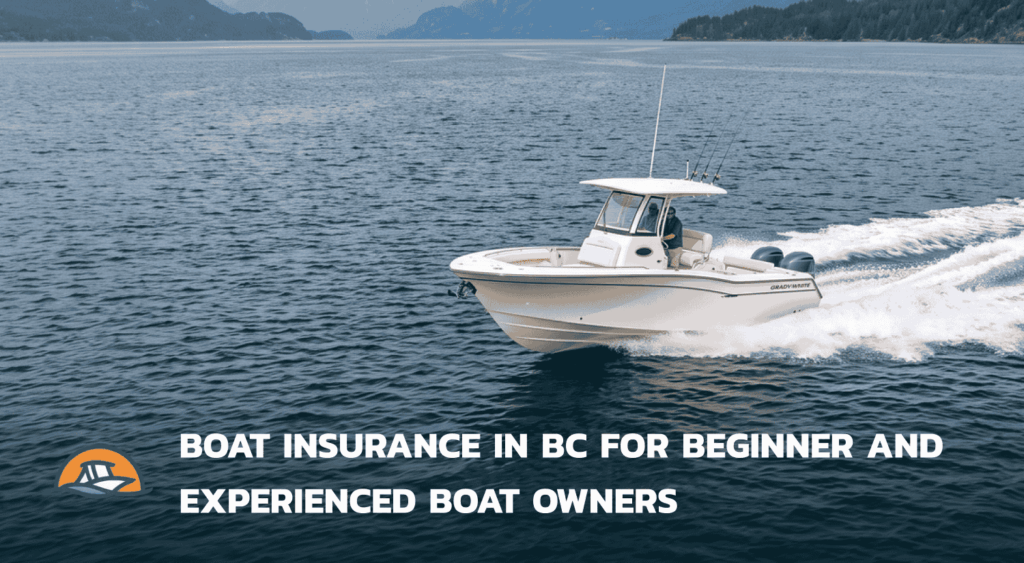
None of that argues against a shallow boat. It argues for being honest about where the boat will spend its hours. If your answer is a tidal flat in the morning and the Strait of Georgia in the afternoon, a shallow hull is the wrong tool and a proper offshore hull is the right one. Grady-White builds the fiberglass end of that range, and nobody should pretend those hulls get into eight inches of water. They do the opposite job and they do it well.
Choosing Boats for BC Waterways
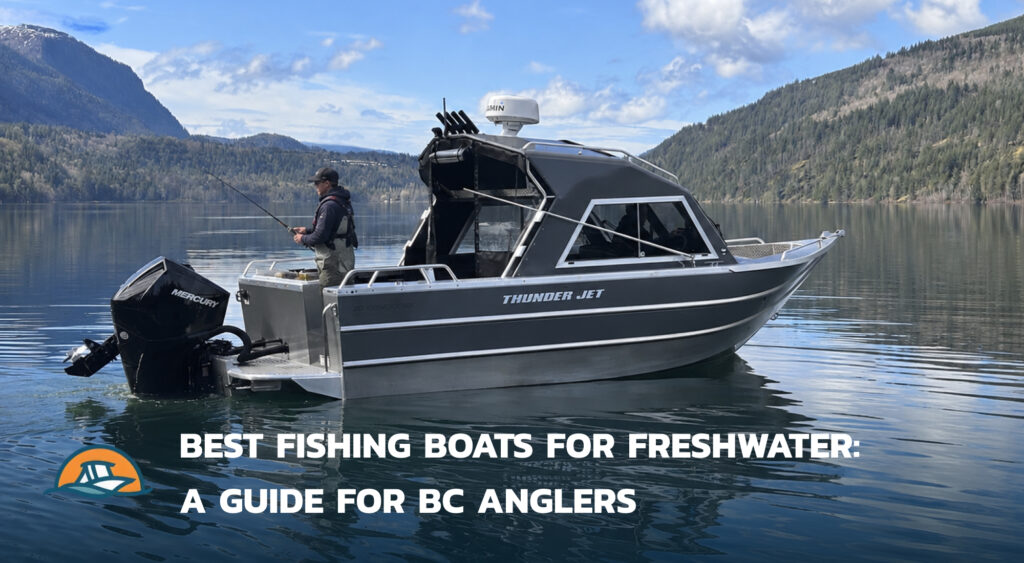
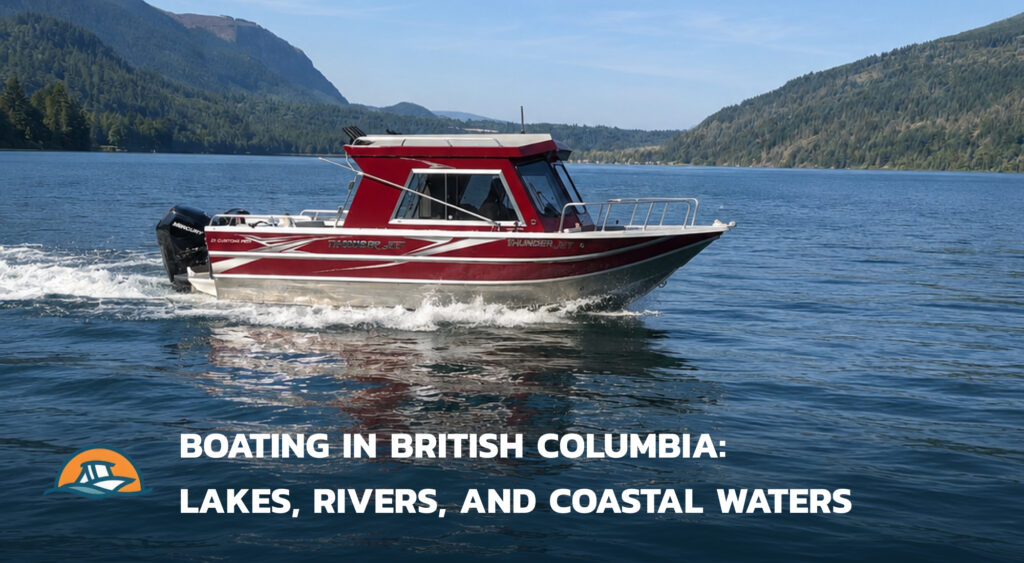
BC river systems are a specific kind of shallow. The Fraser, the Thompson, the Skeena and the Harrison run over cobble and gravel with channels that shift every freshet, and the water drops hard through late summer. That combination punishes propellers and rewards jet drives, which is why welded aluminum jet boats dominate the upper reaches of these rivers. Thunder Jet builds welded aluminum hulls specifically for this, and we carry that line as the largest Thunder Jet dealer in the province. The hull plate thickness and the welded construction are there because gravel contact is a question of when.
There is also a seasonal pattern worth knowing. River levels in the Fraser system peak with the freshet in late May and June and fall through August and September, so a channel that carried you in June may not carry you in September. Guides who run these rivers re-read the water every few weeks rather than relying on last year’s line. Our guide to sport fishing covers which systems hold fish in which months, and those months do not always line up with good water.
How Rigging Affects Performance
A good shallow water rig is more than a hull and a drive. A jack plate lets you raise and lower the engine on the fly, so you can run it high crossing a bar and drop it for efficiency in open water. Trim tabs let you hold the bow down at low planing speeds, which keeps you on plane slower and therefore shallower. A shallow water anchor or a push pole replaces a conventional anchor in water where there is nothing to set into.
Engine choice is part of this too and it is not just horsepower. Jet-rigged outboard motors are a different configuration from the same powerhead on a prop leg, and the right rating depends on hull weight, load and the water you run. A hull that is underpowered for a jet application will not get on plane with a load aboard, and getting on plane is the whole point, because a shallow hull only achieves its shallow running draft once it is up and moving.
Finding the Right Boat for Your Water
Start with the shallowest water you will genuinely run and work outward from there. If the answer is a gravel-bottom river, you want a jet drive on a welded aluminum hull and the conversation is mostly about length and power rating. If it is a shallow lake or a backwater slough, a jon boat or a tunnel hull does the job for considerably less money. If the water is mixed, accept that you are buying a compromise and decide which end of the range you would rather be comfortable at. Our fishing boats range covers the hull types that handle each of those cases.
Glacial silt is the one open question. Fine silt and coarse gravel wear a jet impeller differently, but wear varies so much between boats on the same river that operating habits matter as much as the water itself. If you run silty systems, inspect the impeller more often than the manual suggests and keep notes. Call either location and tell us what water you run, and we will tell you which hulls are worth your time and which ones are the wrong tool.