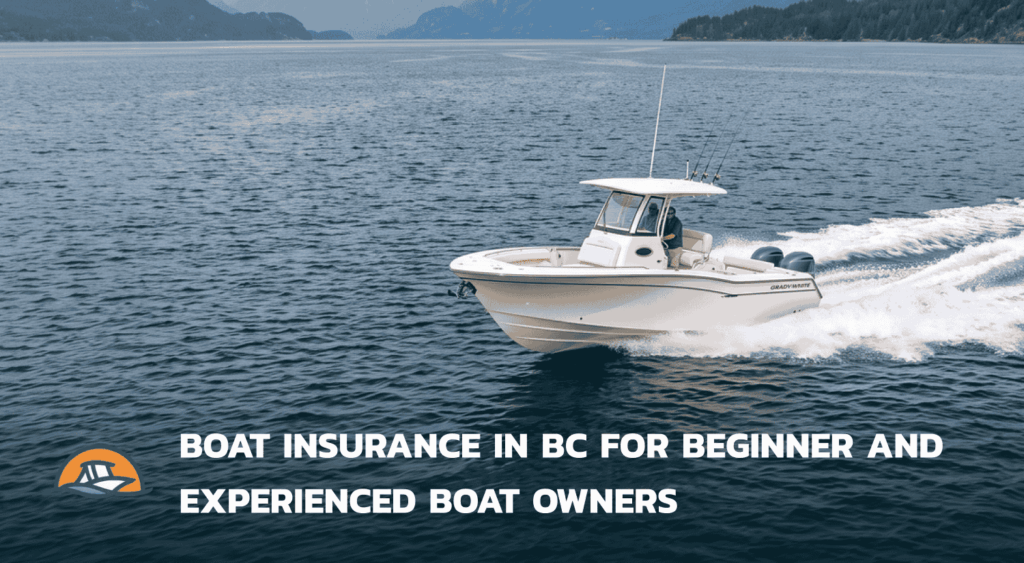
Boat insurance is not a legal requirement in British Columbia, but the absence of a legal requirement does not mean the absence of real risk. A single submerged object strike on BC coastal water can cause tens of thousands of dollars in hull damage, and a liability claim from a collision on the Strait of Georgia can reach amounts most boat owners are not prepared to cover personally. This guide covers what BC boat insurance actually involves, what it costs, and what the province-specific risks look like. If you are also working through the purchase side, our boat financing guide covers how lenders think about insurance requirements.
Do You Legally Need Boat Insurance in BC?
No BC law requires pleasure craft owners to hold a policy. What requires it in practice are two situations. If you finance your boat, the lender will almost certainly require proof of insurance as a condition of the loan. If you store your boat at a marina, the marina will typically require a minimum level of liability coverage before assigning you a berth. Beyond those two situations, the decision is yours.
Home insurance is often assumed to cover a boat. Still, most BC home policies cap watercraft coverage at two to three thousand dollars, restrict the size and horsepower of vessels covered, and only apply while the boat is stored at your property. A dedicated marine policy follows the boat throughout the year, from water to transit to storage.
What Does Boat Insurance Usually Cover in BC?
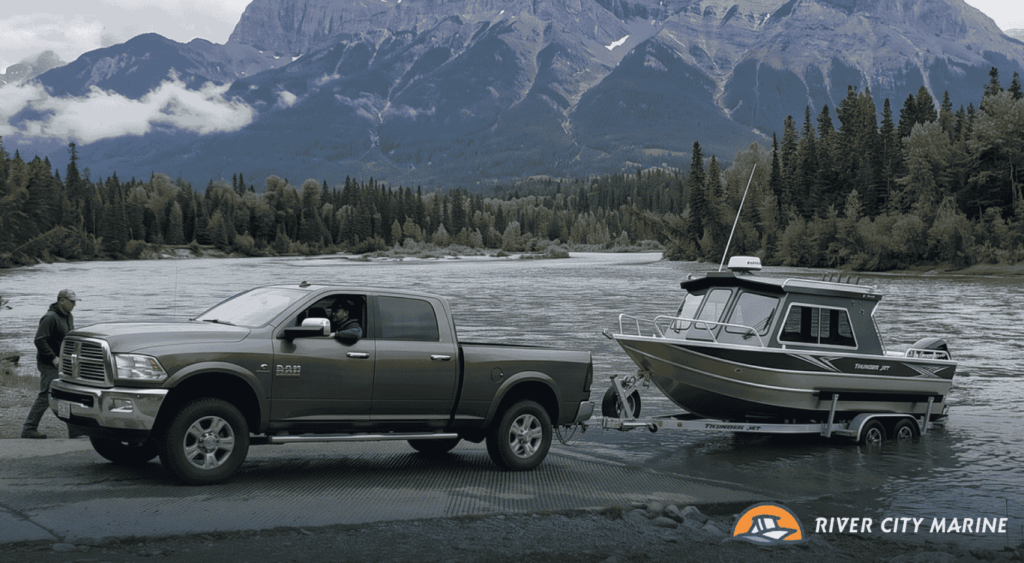
1. Coverage for Your Boat, Engine, and Equipment
This is the physical damage component. It covers repair or replacement of your boat, engine, and onboard equipment following a covered loss, typically collision with another vessel or dock, impact with a submerged or floating object, fire, theft, vandalism, and weather damage. Transit coverage while the boat is on a trailer is usually included, which matters for Fraser Valley buyers moving boats between launch points.
2. What Happens If Your Boat Damages Property or Injures Someone?
Under the federal Marine Liability Act, a boat owner can be held responsible for up to 1.5 million dollars in damages following an accident that injures someone or damages their property. A standard policy covers you for damage to another vessel, a dock, or a third party, and for injury claims arising from your operation. Waterskiing and towing liability are often available as an add-on.
3. Coverage for Gear, Electronics, and Personal Items
Fishing gear, electronics, and personal effects carried on the boat can be added to the policy. This matters most for anglers carrying expensive rod setups, downriggers, and chartplotters, or for coastal boaters on overnight trips.
4. Coverage for Disabled, Sunk, or Grounded Boats
Emergency towing covers a commercial tow if your boat becomes disabled on the water. Salvage coverage addresses recovery costs if the vessel sinks or runs aground. Both are worth carrying given the distances involved in typical BC boating routes.
5. Coverage for Fuel Leaks, Oil Spills, and Cleanup Costs
If your boat sinks or is involved in an accident that releases fuel or oil into the water, you can be held liable for environmental cleanup costs. Some policies include a basic pollution liability clause. Check for it and know the limit.
Agreed Value vs Actual Cash Value
This is the most important coverage decision most BC boat owners make. Under an agreed value policy, you and the insurer lock in the boat’s value at the time of purchase. A total loss pays that agreed amount minus your deductible, regardless of depreciation. Under an actual cash value policy, a total loss pays the market value of the boat at the time of the claim, after depreciation is applied.
| FACTOR | AGREED VALUE | ACTUAL CASH VALUE |
| TOTAL LOSS PAYOUT | Full agreed amount, no depreciation deducted | Market value at time of loss, minus depreciation |
| PARTIAL REPAIRS | Full replacement cost on damaged parts | Repair cost reduced by depreciation on aged components |
| PREMIUM | Higher | Lower |
| BEST FOR | New or high-value boats | Older boats where the depreciated value reflects reality |
| BRITISH COLUMBIA NOTE | Recommended for new Grady-White and Thunder Jet purchases | Common requirement once a boat exceeds 10 to 15 years |
For buyers purchasing a new Grady-White or Thunder Jet, agreed value is almost always the right choice. These boats hold their value well, but a depreciated payout during the first few years of ownership still falls well short of the purchase price. Most insurers offer agreed value on new boats and may transition to actual cash value as the boat ages. If you are still comparing what different boats cost to own overall, our boat cost guide covers the full picture.
Local Risks British Columbia Boat Owners Should Plan For
1. Submerged Objects and Deadheads
Submerged object impacts are the most common boat insurance claim in BC, according to major BC marine insurers. Deadheads are waterlogged logs floating vertically just below the surface, invisible from a moving boat, and common throughout BC coastal inlets and river systems. A serious deadhead strike on a fiberglass hull can cause structural damage costing fifty thousand dollars or more to repair. Confirming that your policy explicitly covers submerged object impacts is worth doing before you need it.
2. Saltwater Corrosion
Most boats operating between Vancouver and the Gulf Islands or up the coast toward Vancouver Island are regularly exposed to saltwater. Policies differ in how they treat ongoing corrosion versus sudden corrosion damage resulting from a covered event like a sinking. Understanding where that line sits in your policy matters over a multi-year ownership period.
3. Storms, Wind, and Rough Water Damage
Howe Sound is one of the better-known examples in Greater Vancouver, where afternoon thermal winds can build substantial chop within an hour on what was a calm morning. Weather-related perils are covered under most marine policies, but reviewing the geographic territory of your coverage is important if you plan to run offshore or along the outer coast.
4. Theft and Vandalism
Outboard motors, GPS chartplotters, fishfinders, and portable gear are consistent theft targets at BC marinas. Checking that your policy covers marine electronics and detachable equipment to full replacement value rather than a capped personal property limit is a conversation worth having with your broker before you buy.
What Affects the Cost of Boat Insurance in BC?
Premiums in BC typically range from around 300 to 500 dollars per year for a standard recreational vessel, though a high-value coastal cruiser or a performance boat will cost considerably more. The factors that most directly affect your premium are listed below.
| FACTOR | WHAT IT MEANS FOR YOUR BC POLICY |
| BOAT TYPE AND VALUE | A 34-foot express cruiser costs considerably more to insure than an 18-foot aluminum river boat. |
| NEW VS PRE-OWNED | Pre-owned boats over 15 years may require a marine survey before an insurer will quote. |
| WHERE YOU BOAT | Offshore coastal routes carry a higher risk profile than lake or river use. |
| STORAGE | Indoor locked storage earns the best rates. Marina berths fall in between. Open water mooring is the highest. |
| CROSS-BORDER TRAVEL | Standard BC policies cover most of Canada and some US waters. Running south of the border regularly may require a territorial extension. |
| CLAIMS HISTORY AND TRAINING | A clean record over three to five years and completing Canadian Power and Sail Squadrons courses can reduce your premium. |
| PCOC | Operating without one can void your insurance in the event of an accident or liability claim. |
| ACCESSORIES | Trailers, detachable motors, and electronics should be listed properly, or gaps in coverage will emerge if they are damaged or stolen. |
What BC Boat Owners Are Required to Have
Boat insurance is not required by law in BC, but two practical situations make it effectively mandatory for most owners. If you are financing your boat purchase through a lender such as LMG, physical damage coverage at least equal to the outstanding loan balance is a standard loan condition. The lender will want to be named as a loss payee on the policy, meaning they receive settlement first in the event of a total loss. This is the same principle as a mortgage lender requiring home insurance, and it is non-negotiable. The second situation is marina storage. Most BC marinas require proof of liability coverage before assigning a berth. The minimum limit varies by marina but commonly falls between one and two million dollars. Arriving with a boat and no policy means waiting for coverage to be arranged before the slip is assigned, which is not how anyone wants to start the season.
A third requirement that connects directly to your insurance coverage is the Pleasure Craft Operator Card. A PCOC is a federal requirement for anyone operating a powered vessel in Canada, and operating without one provides an insurer with grounds to deny a claim in the event of an accident or liability incident. This is not a technicality that gets overlooked in practice; it is a standard exclusion that insurers apply. The card does not expire, and obtaining one involves completing a Transport Canada-approved boating safety course and passing the exam, which is available online. Anyone who regularly operates your boat should hold their own card. If you are working through the purchase process and have questions about what documentation is required before taking delivery, our sales team walks through this at every new boat delivery walkthrough. It is a standard part of how we hand over a boat.