Ask ten anglers for the best fishing boats for freshwater and you will hear ten confident answers, and most of them are correct for the water that person fishes. The more useful question is which hull suits your water, your species, and your tow vehicle, because a boat that shines on a flat reservoir can be miserable on a gravel-bar river. In British Columbia, that spread is wide, since the Fraser River, Harrison Lake, and Okanagan Lake can each demand a different kind of boat. We carry aluminum jet boats and fiberglass boats, so we will say where those fit and where they do not.
Start With the Water Before the Boat
Hull shape does most of the work, so water type is the first filter. Shallow rivers with gravel and debris reward flat or tunnel bottoms and tough aluminum. Large lakes with afternoon wind reward a deeper V and more freeboard. Small protected lakes forgive almost anything, which is why a cheap jon boat can outperform a $60,000 rig on the right pond. Species matter less than people expect, since trout, kokanee, and bass all fall to a well-placed troll or cast from nearly any competent hull.
The second filter is less glamorous and decides more purchases than fish do, and it is how the boat actually reaches the water. Towing capacity, driveway width, ramp quality, and storage space all limit what you will really use. A 22-foot boat that stays in the yard because hitching up takes forty minutes is a worse fishing boat than a 17-footer that goes out every weekend. Ramps in the Fraser Valley and the Okanagan range from smooth concrete to steep gravel, so know which kind you will face most often before you shop.
1. Aluminum Modified-V Boats
The 16- to 18-foot aluminum modified-V is the workhorse of Canadian freshwater fishing, and as a single boat that does most things, it is hard to beat. It handles moderate chop, tows behind a mid-size SUV or truck, takes a motor in the 50 to 115 horsepower range, and shrugs off dock rash and gravel landings that would scar a fiberglass hull. Lund, Alumacraft, and Crestliner built much of the category’s reputation, and the layout is easy to find at dealers across the country.
The compromise is ride and draft. A modified-V rides rougher than a deep-V in big chop and draws more water than a flat bottom, so it is a generalist instead of a specialist. On Harrison Lake it will get you home but you will feel every wave, and on the Fraser it will run the deeper channels well and then stop at the first serious gravel bar. That limit is exactly where the next two hull types come in.
2. Jon Boats for Shallow Rivers and Small Water
A jon boat is a flat-bottom aluminum box, usually 12 to 16 feet, and its simplicity is the point. It floats in a few inches of water, weighs little enough to launch from a gravel bank, and pairs with a 9.9 to 25 horsepower outboard that sips fuel. New ones typically run roughly $1,500 to $6,000 depending on size and build, which makes this the cheapest way into serious freshwater fishing.
The weakness appears the moment the wind does. A flat bottom pounds in chop, feels tippy when two people stand to cast, and offers little shelter. For a creek, a marsh, or a sheltered small lake, none of that matters. For Harrison Lake on a breezy afternoon, it matters a great deal, and you should be honest with yourself about how often that afternoon will be the one you are out in.
3. Jet Boats for Gravel Bars and Skinny Rivers
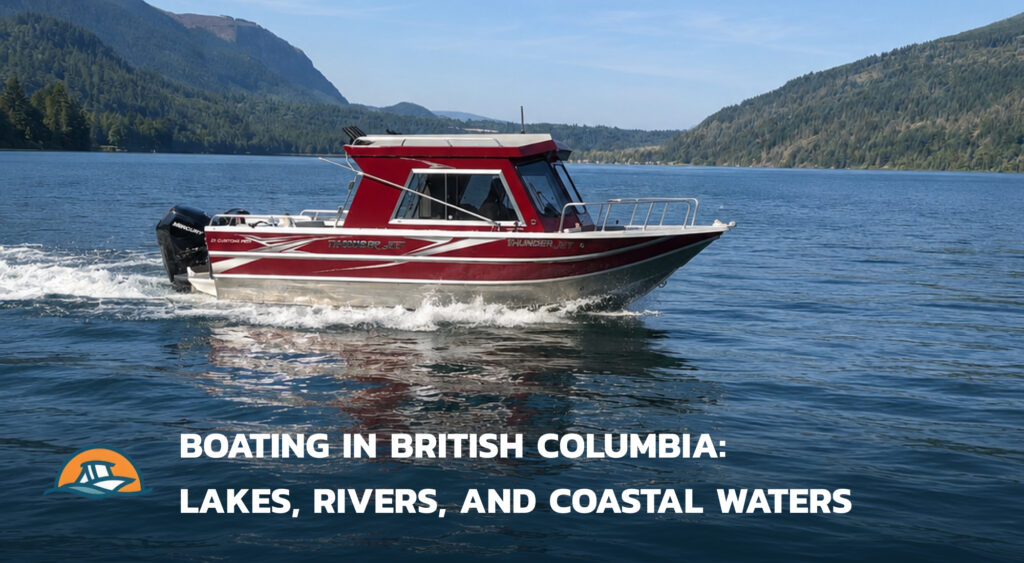
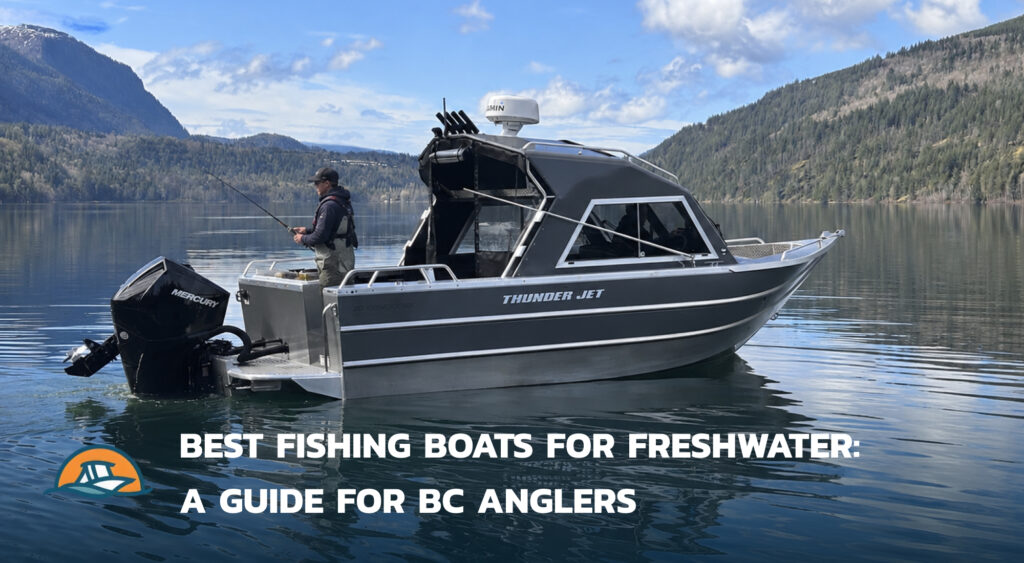
When a river is shallow, rocky, and moving, a propeller becomes a liability and a jet drive stops being a luxury. The impeller sits inside the hull, so a welded aluminum jet boat can run in 8 to 10 inches of water and slide over a gravel bar without destroying a lower unit. This is the setup behind most serious fishing on the Fraser, Harrison, and Pitt Rivers, and it is why we carry the full range of Thunder Jet boats, from compact models around 18 feet up to pilothouse boats near 28 feet.
Jet boats come with honest drawbacks. They cost considerably more than a comparable propeller boat, with new models from a dealer typically starting around the $100,000 mark, and they burn more fuel and lose some efficiency on deep open water. Plenty of anglers fish the lower Fraser well with a standard aluminum boat and a careful eye on the bars. Whether the extra cost buys enough access to justify it depends on how much of your fishing happens in water a propeller cannot reach, and that is a judgement only you can make.
4. Bass Boats and Pontoons
Bass boats are low, fast fiberglass platforms with big casting decks, built for calm lakes and tournament pace. Ranger, Nitro, and Skeeter are the names most anglers recognize, and new rigs commonly start around $30,000 and climb past $80,000. They are superb where they belong and poor almost everywhere else, since low freeboard and a deep hull make both skinny water and rough water unpleasant.
Pontoons suit a different angler, the family that fishes but also wants to swim, picnic, and cruise. The wide deck on two or three aluminum tubes gives more usable space than almost any boat at a similar price, and the ride is steady at anchor. They are slow, they handle wind poorly, and they are no help on rivers, so they belong on sheltered lakes and calm interior bays.
5. Deep-V Hulls for Big Water
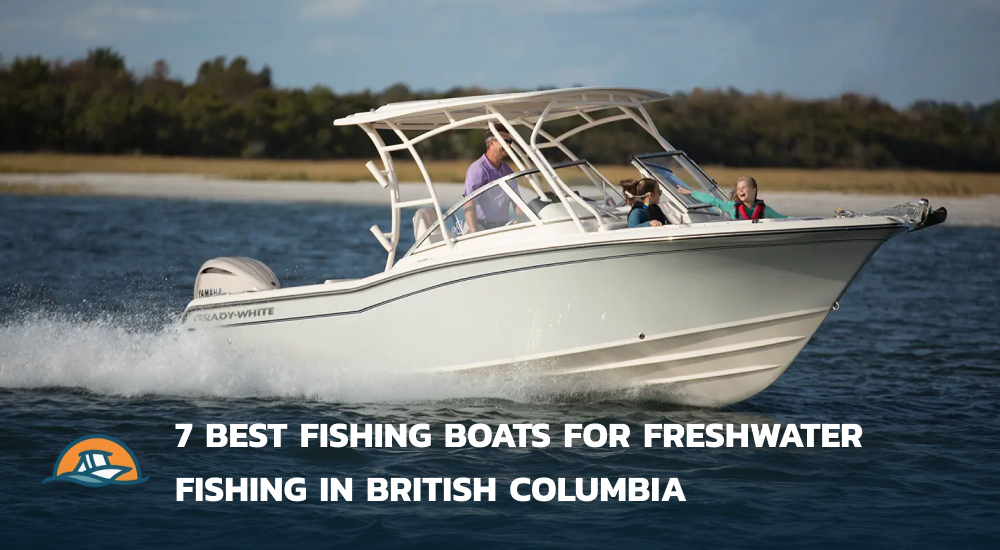
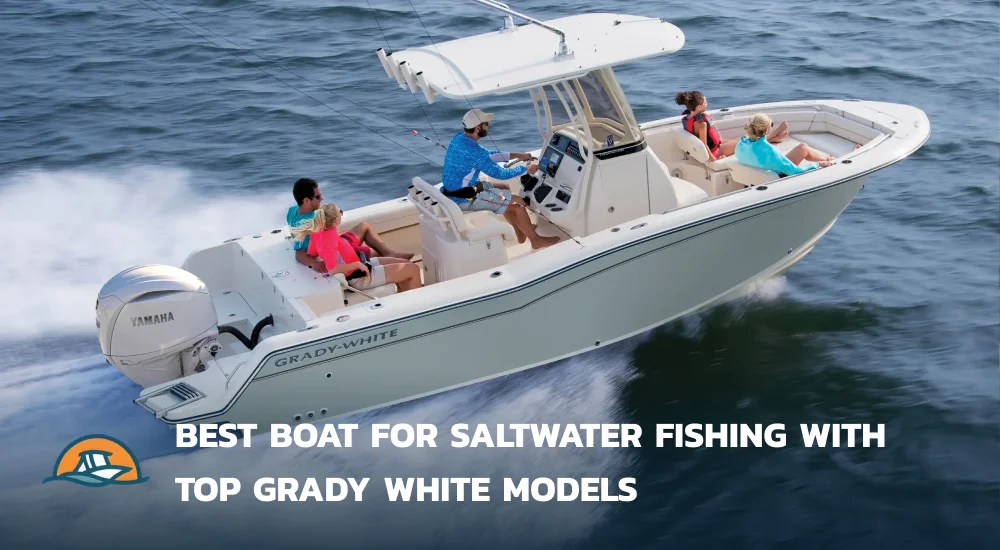
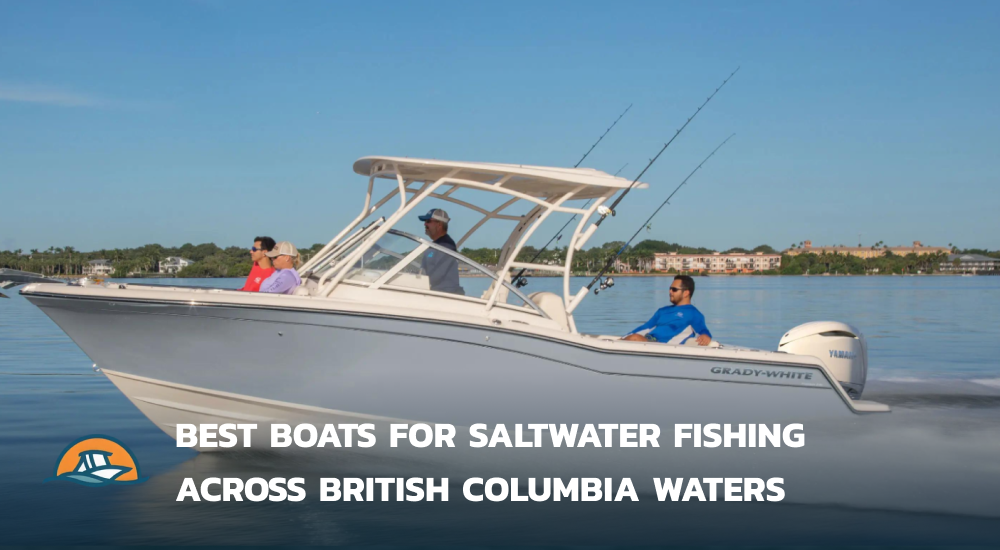
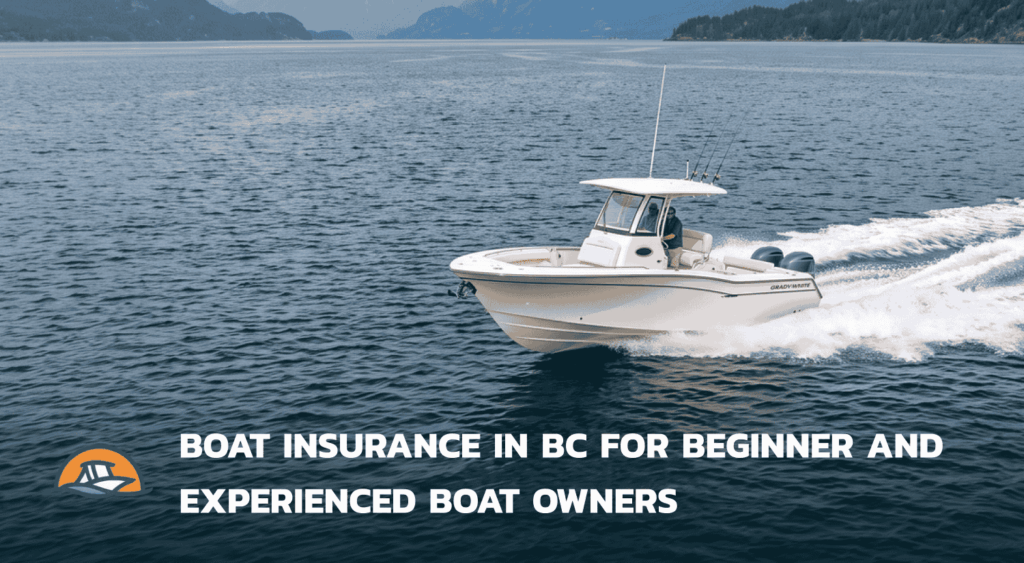
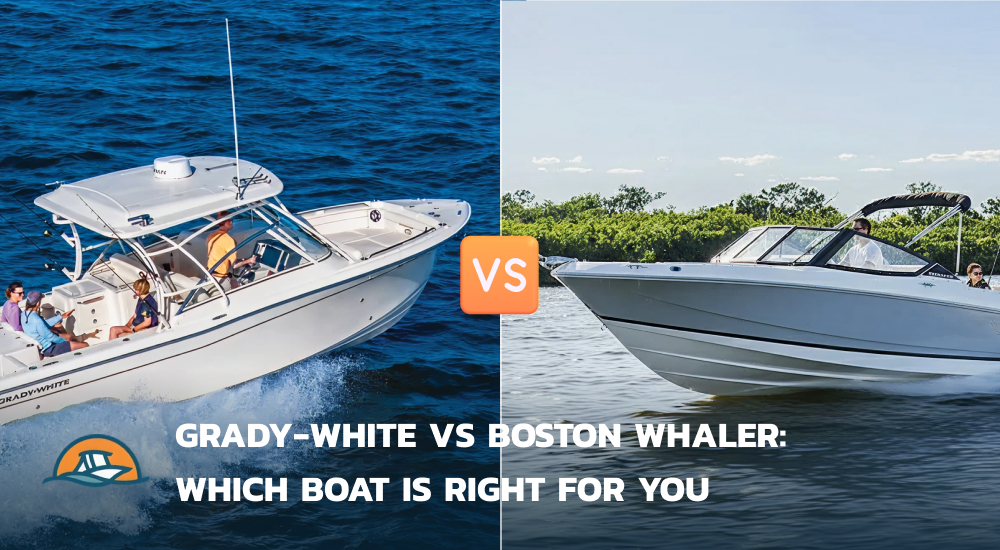
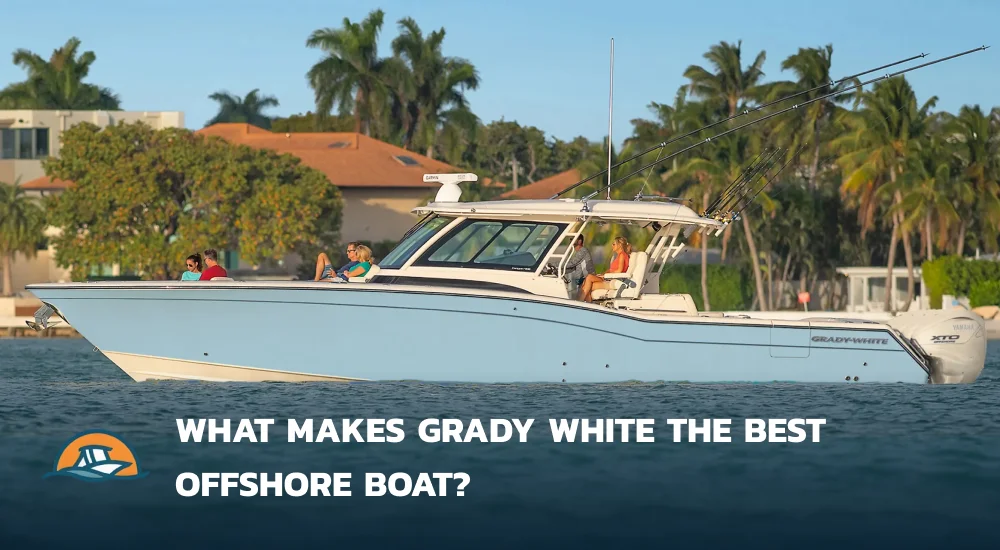
Large lakes such as Okanagan Lake and Kootenay Lake build real waves, and a deep-V hull cuts through them where a flat or modified-V pounds over them. Deep-V boats come in aluminum and fiberglass, and the fiberglass versions, including the Grady-White boats we carry, give the smoothest and driest ride in chop. Most of those hulls were designed for saltwater, so they suit the largest lakes and the coast better than shallow rivers, and the cost shows up in draft and price.
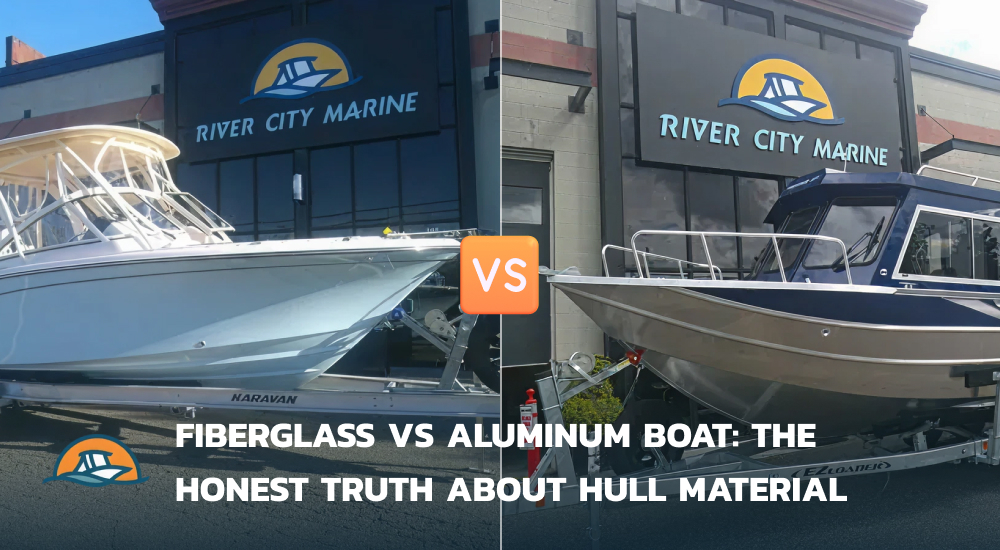
Anyone choosing between aluminum and fiberglass for deep water should weigh weight, maintenance, and resale as well as ride. Aluminum tows easier and tolerates abuse, while fiberglass rides better and holds its finish. A closer look at hull materials lays out the trade-offs before you commit to either.
How the Hull Types Compare
Seeing the options side by side makes the pattern obvious, because every hull type is a bet on one kind of water. The table below sums up where each one earns its keep and where it costs you.
| HULL TYPE | BEST FOR | MAIN DRAWBACK |
|---|---|---|
| Aluminum modified-V | Mixed lakes and larger rivers | Rougher than a deep-V in big chop |
| Jon boat | Creeks, marshes, and small rivers | Pounds in chop and feels tippy |
| Jet boat | Shallow, rocky, fast rivers | Higher purchase price and fuel use |
| Bass boat | Calm large lakes | Poor in shallow or rough water |
| Pontoon | Sheltered family lakes | Slow and affected by wind |
| Deep-V | Large, choppy lakes | Deeper draft and higher cost |
Notice that no rowboat wins everywhere. The boat that looks best on paper is usually the one that matches your most common day on the water, not your best imagined trip, and that is worth writing down before you visit a single dealer.
Features That Matter More Than the Badge
Once the hull type is settled, a handful of features decide whether the boat fishes well or only looks the part. Welded seams beat riveted ones for hard river use, since welds flex with the hull while rivets can weep after seasons of beaching on gravel. Beam and deck layout matter more than overall length, because stable standing room is what you use all day.
- Hull thickness and welded construction on any boat that touches gravel or rock.
- Beam wide enough to stand and cast with a second angler aboard.
- A transom or bow that accepts a trolling motor cleanly.
- Rod storage and live-well or storage space sized to how you actually fish.
- Loaded trailer weight that your vehicle tows comfortably, including fuel and gear.
- Seating and shelter that make a cold October morning tolerable.
Electronics deserve a budget, but a decent sonar and chartplotter can be added later while hull and beam cannot. A boat with the right bones and a basic dashboard is a better purchase than a poorly matched hull loaded with screens. Buy the right hull first, learn how you actually fish over a season or two, and upgrade the dashboard second.
Licences and Rules for Freshwater Anglers
Freshwater fishing in BC requires a provincial licence bought through the WILD system and linked to your Fish and Wildlife ID. For the 2026-27 season the annual basic licence is $41.15 for BC residents before tax, with higher prices for non-residents, short-term options, and extra requirements for steelhead, sturgeon, salmon retention, and Classified Waters. Tidal water needs a separate licence through Fisheries and Oceans Canada, and the two do not substitute for each other. The guide to sport fishing in BC covers species and seasons in more depth.
The boat needs paperwork too. Transport Canada requires a Pleasure Craft Licence for powered boats of 10 horsepower or more, renewed every five years from 2026, and every operator needs a Pleasure Craft Operator Card, as set out in the licence requirements. Before launching in a new lake, pull the drain plug, drain every compartment, and clean off plants and mud, since BC applies these rules whenever a boat moves between water bodies.
Choosing Between Them
If we had to give one recommendation for a first freshwater boat in BC, it would be a 16 to 18-foot aluminum modified-V, because it works almost everywhere you will fish in your first few seasons and forgives most mistakes. It is not the exciting answer, and anglers who spend their time on skinny gravel rivers will outgrow it quickly. Those anglers usually end up in a jet boat, and a few end up owning two boats, one for lakes and one for rivers.
Cost deserves its own look before you decide, since purchase price is only part of owning a fishing boat. The ownership costs in BC include insurance, registration, storage, service, and fuel, and together they change which boat is actually affordable. If you fish both a river and a big lake, you may never find one hull that does both well, and that is a normal place to end up.