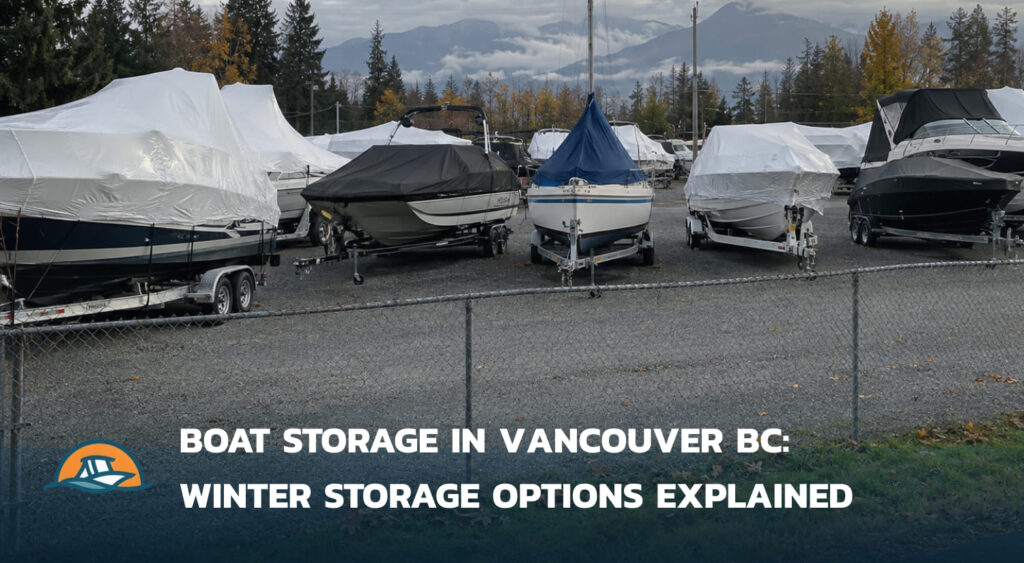
Boat storage in Vancouver BC and the surrounding Fraser Valley is one of those decisions most boat owners leave too late, and October is when that becomes a problem. Facilities fill up, service departments back up, and the window to winterize properly before the first hard weather closes faster than most people expect. This guide covers the main boat storage options available to Greater Vancouver and Fraser Valley owners, what each type actually costs in 2026, and the service work that needs to happen before the boat goes away. Getting this right means your boat is ready to launch in spring without a repair bill as the first stop.
Why Boat Storage Fills Up Early in Greater Vancouver
Marina slip space on Burrard Inlet and False Creek is expensive and spoken for long before the season ends. Demand for haul-out services and dry storage in the Lower Mainland spikes every October as the boating season winds down at roughly the same time for everyone. Owners who want a specific facility, a specific storage type, or a service booking alongside haul-out need to be thinking about this in September rather than late October. Yard storage and indoor facilities fill on a predictable schedule tied to weather and the fishing season closing out, and the window for a clean booking gets tighter every year as the local boating population grows.
The other thing that makes Greater Vancouver different from smaller BC markets is what the environment actually does to a boat left outside without proper preparation. The combination of heavy autumn rain, salty marine air from Burrard Inlet and coastal routes, and the damp cold of the Fraser Valley accelerates corrosion and moisture damage on both fiberglass and aluminum hulls in ways that a drier inland climate does not. A boat that goes into winter boat storage in Vancouver, BC, properly winterized and properly covered comes out in spring in a different condition than one that got the minimal treatment. Our service department handles full end-of-season preparation for Mercury- and Yamaha-powered boats, and the booking window tightens significantly after the first week of October.
Boat Storage Options and Costs in Vancouver BC
Four main options are available to Greater Vancouver and Fraser Valley boat owners when it comes to where the vessel goes for winter. None of them is right for every boat or every situation. The choice usually comes down to how much protection the hull needs, whether any work is planned during the off-season, and what fits the budget.
Storing Your Boat at Home for Winter
Storing the boat on its trailer at home is the cheapest option and the one most Fraser Valley owners with a property and a driveway can access if the municipality or strata allows it. The boat is accessible whenever you need it, there is no facility fee, and access is entirely under your control. The downside is exposure. A vessel sitting outside on a residential property through a BC winter needs a high-quality cover or professional shrink wrap, proper winterization, and blocking to keep the trailer stable on soft ground. Strata and HOA rules vary significantly across Greater Vancouver and many explicitly prohibit large trailers on residential lots, so confirming this before assuming the option is available is worth the phone call.
Professional shrink wrapping in the Lower Mainland runs roughly $18 to $25 or more per linear foot as of 2026, so a 22-foot boat comes in at around $396 to $550 for the wrap alone. A custom-fitted canvas cover costs more upfront but is reusable across multiple seasons. Either is significantly better than a tarp through a BC winter.
Outdoor Boat Storage in a Secured Lot
A fenced, secured outdoor lot is the most common boat storage solution for Fraser Valley owners who cannot store at home. The boat stays on its trailer, the facility provides security and a fixed address, and the cost is considerably lower than indoor storage or marina berths. Rates vary by facility and boat length but generally run between $150 and $300 per month in the Greater Vancouver and Fraser Valley area based on current 2026 market pricing. A five-month winter storage contract for a 22-foot aluminum boat runs roughly $750 to $1,500 for the season before any service work is included. For a complete picture of what these costs represent within overall boat ownership, our detailed boat cost guide covers storage alongside insurance, service, and registration in one place.
Quality varies significantly between outdoor lot facilities and it is worth asking the right questions before signing a contract. Check whether the lot is properly fenced and gated with restricted access, how drainage is handled so boats are not sitting in standing water through the wet season, and whether the facility has on-site power for a battery maintainer. A cheap unsecured lot is not a saving if a piece of electronics goes missing over winter.
Indoor and Covered Boat Storage Options
Indoor storage provides the best protection from weather, UV exposure, and theft, and in BC’s climate that matters more than in drier inland markets. Prolonged moisture exposure on fiberglass gelcoat, canvas, and engine components causes the kind of slow damage that only becomes visible at spring launch. Indoor facilities in Greater Vancouver typically charge per linear foot and rates range from around $250 to $500 or more per month depending on facility type and location. Some facilities offer dry-stack racking systems suited to aluminum jet boats in the 18 to 22-foot range that do not require much vertical clearance.
Availability is the main constraint with indoor storage. Well-run indoor facilities in Greater Vancouver and the Fraser Valley fill earlier than outdoor lots and some operate waitlists for their best bays. If this is the right option for your boat, September is the practical target for booking rather than waiting until the season is over.
Keeping Your Boat in a Marina Over Winter
Leaving the boat in a marina slip through winter is the most convenient option if the marina allows it and a slip is available. No haul-out, no trailer, and the boat is accessible whenever conditions allow. The cost is the highest of the four options. Wet slip rates in Greater Vancouver marinas vary by location and berth type, but a covered or enclosed berth for a boat in the 20 to 30-foot range typically runs $400 to $800 or more per month in 2026. Competition for berths on Burrard Inlet is significant and most well-placed marinas do not have casual availability. Annual agreements must be secured well in advance of the season, and waiting until October to ask is usually too late.
The important point specific to winter wet slips in BC is that the boat still needs proper winterization even if it stays in the water. The engine cooling system, battery, and any through-hull fittings all need attention before extended winter downtime regardless of where the vessel is sitting. Our Mercury-certified and Yamaha-certified service technicians handle this work as a complete end-of-season service.
| STORAGE TYPE | TYPICAL MONTHLY COST (2026) | BEST FOR |
|---|---|---|
| Home Trailer Storage | No facility fee | Fraser Valley owners with property and no strata restrictions |
| Outdoor Lot | $150 to $300/month | Most Fraser Valley boat owners, cost-conscious |
| Indoor Or Covered | $250 to $500+/month | Best protection, high-value boats or electronics-heavy builds |
| Marina Wet Slip (Winter) | $400 to $800+/month | Convenience, larger vessels, established berth holders |
What to Do Before Your Boat Goes Into Storage
The storage facility is only half of the equation. The service work done before the boat goes away determines what condition it comes out in. Skipping or partially completing these steps is exactly how spring repair bills happen.
Winterize the Engine Before Storage
This is the most important step and the most commonly deferred. Full engine winterization for a Mercury or Yamaha outboard covers flushing the cooling system with fresh water to remove salt, silt, and debris from the cooling passages, draining and replacing the lower unit gear oil, fogging the cylinders to protect internal surfaces from corrosion during storage, stabilizing the fuel system to prevent varnish deposits from forming over winter, and on four-stroke engines, changing the engine oil and filter before the boat sits. Our Mercury-certified technicians and Yamaha-certified technicians handle full winterization as a complete service. October bookings fill faster than most owners expect. Call in September and get the date you want.
Aluminum boats like Thunder Jet that spend the season on BC rivers need particular attention to the cooling system flush because silt and sediment from river water accumulate in the passages across the season and accelerate corrosion if left over winter. If your boat has been running the Fraser River all summer, this step is not optional. Book it through our service department.
How to Store Your Boat Battery for Winter
A marine battery left partially discharged through a BC winter sulfates, meaning lead sulfate crystals form on the battery plates and permanently reduce its capacity. Disconnect the negative terminal first, then the positive. Charge it to full before storing in a cool, dry indoor location. A smart battery maintainer set to float mode over winter extends battery life significantly and guarantees a strong start in spring. A fully charged lead-acid battery will not freeze in typical BC winter temperatures. A partially charged one can.
Check the Hull and Canvas Before Storage
The end of season is the best time to catch hull damage while it is still minor. A small gelcoat crack or dock rash along the waterline looks cosmetic in October. Left through a BC winter without sealing, water wicks into the laminate and turns a surface repair into a structural one by spring. Check the canvas for zipper damage, tears, and cloudy window panels while there is still time to address them before storage. Small repairs addressed now cost a fraction of what they cost if left to deteriorate through the wet season.
When to Book Boat Storage in Vancouver BC
September is the right target for booking both storage and service, not because the boat needs to come out of the water in September, but because October and November service slots often fill up early. Owners who book ahead have a better chance of getting the date that works for them. Waiting until late October usually means fewer options and a longer wait.
Winterization should be booked at the same time. The engine, fuel system, battery, lower unit, and other key components need to be prepared before the boat sits through the winter. Getting the work done before storage helps prevent corrosion, fuel problems, battery issues, and other repairs that can show up when you are ready to get back on the water in spring.