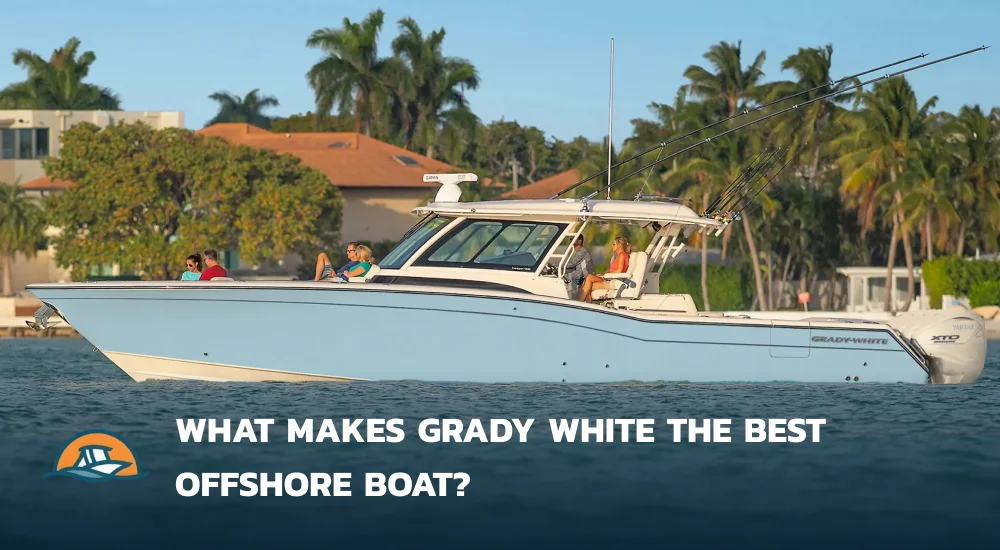
Grady-White Offshore Boats: Built Right for Serious Water
When people search for the best offshore boat, they want to know which one handles rough water without beating them up. Which one can their family safely move around on? Which one will still run strong years down the road without constant repairs? Best means different things depending on what you need. Some people care most about ride quality. Others focus on fishing capability. Some want family-friendly features.
Grady-White keeps coming up in these discussions because experienced boaters talk about them. We have represented the brand since 2018 and see why it has earned multiple customer satisfaction awards over the years. The boats hold their value well, and owners tend to keep them for a long time. This guide breaks down what actually matters when choosing an offshore boat and why Grady-White has built such a strong reputation.
Key Things to Look For When Choosing a Boat
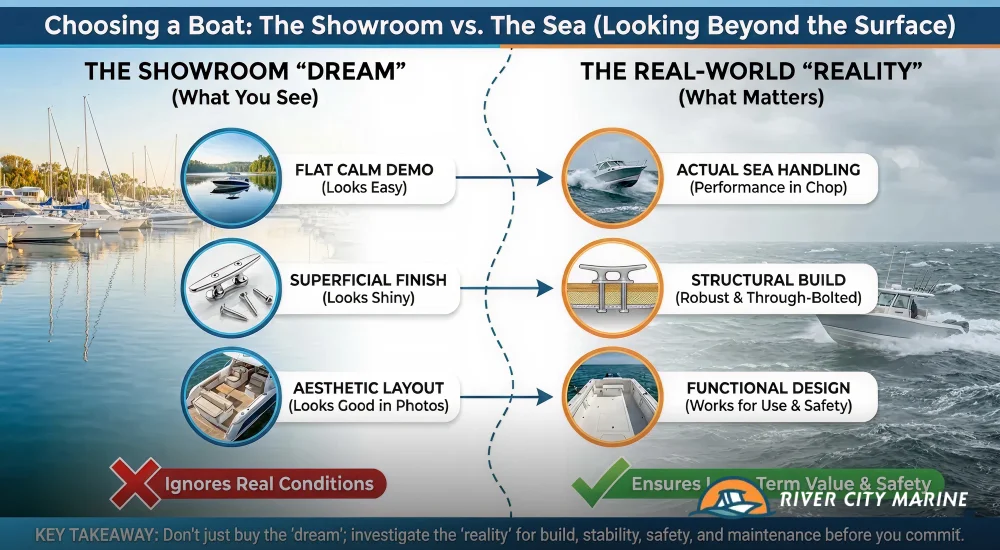
- How the boat handles in actual sea conditions, not flat calm demonstrations at boat shows.
- Build quality you can see in hardware, through-bolts, and fiberglass work.
- Hull shape and how it affects stability when you stop to fish.
- Self-draining features, handholds, and freeboard that keep you safe.
- Deck layout that works for your actual use, not just looks good in photos.
- Real-world maintenance costs and how parts hold up to saltwater.
Features That Make Grady-White a Truly High-Quality Boat
1. Hull and Construction Quality
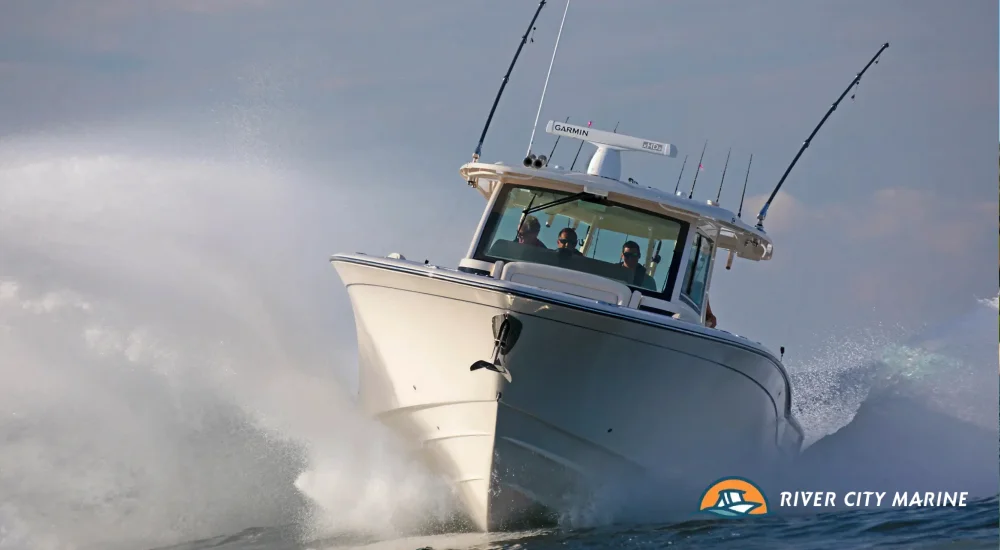
Hull design controls everything about how your boat performs. You can add fancy electronics and comfortable seating, but if the hull pounds in chop, nothing else matters much. Grady-White builds the SeaV2 hull with a variable deadrise that sits under 20 degrees at the transom for stability when drifting, increases to about 30 degrees at the middle section, then hits over 50 degrees at the bow to slice through waves. This graduated approach cuts through rough water differently than hulls with constant angles. Construction shows up years later with hand-laid fiberglass that lasts longer than chopper gun spray, no wood core, so nothing rots if water gets in, and full foam flotation between the hull and deck that adds structural strength plus safety.
2. Power and Handling
Engine choice matters, but how the boat handles that power matters more. A hull matched properly to its engines tracks straight without constant steering corrections, turns without excessive lean, and gives predictable throttle response. Most people run offshore boats between 20 and 30 knots for cruising because top speed looks impressive on spec sheets, but you rarely use it. What counts is how the boat runs hour after hour at cruise speed without beating you up or burning through the fuel tank. Yamaha outboards pair well with most Grady-White hulls, and the boats run efficiently without needing maximum horsepower ratings.
3. Fishing Features and Deck Layout
Rod holders and cup holders are baseline features, but real fishing boats need live wells sized for keeping bait alive during long runs offshore, fishboxes that work best in-floor so they do not eat up deck space, and tackle storage that stays accessible without getting in the way when you are moving around fighting fish. The casting platform needs a solid footing because some boats put it too high or make it too narrow. Center console layouts give you access all around the boat, while dual console designs add cabin space for families, but you lose some fishing room. Walk around a few boats at the dock and open every hatch to check if you can reach things and see if the layout makes sense for how tall you are and how you move.
4. Safety and Reliability
Self-bailing cockpits drain water overboard automatically, which matters when waves come over the gunwale or when you are cleaning fish. Through-bolted cleats and handholds are not optional for offshore work because press-fit hardware pulls out when you need it most. Freeboard height keeps water out of the boat, though some manufacturers drop the gunwales lower for easier boarding, but you pay for it in rough conditions. Electrical systems need marine-grade wiring with proper connections, bilge pumps should be easy to access for maintenance, and these details cost more to build right, but they separate boats made for serious use from boats built to hit a price point.
5. Comfort and Everyday Usability
Long days offshore require more than fishing capability because seating that supports your back matters during rough rides, dry storage keeps gear from getting soaked, and shade options are not luxury items when you are out for eight hours in summer. Small things add up like cup holders in spots you can actually reach, charging ports where you need them, gauges you can read in bright sun, and smooth gelcoat that washes clean without scrubbing. Nobody buys a boat for cup holders, but these details affect how much you actually enjoy using it, so test this during your sea trial by spending time at the helm and moving around the deck with the boat running.
Why Grady-White Earns a Strong Reputation
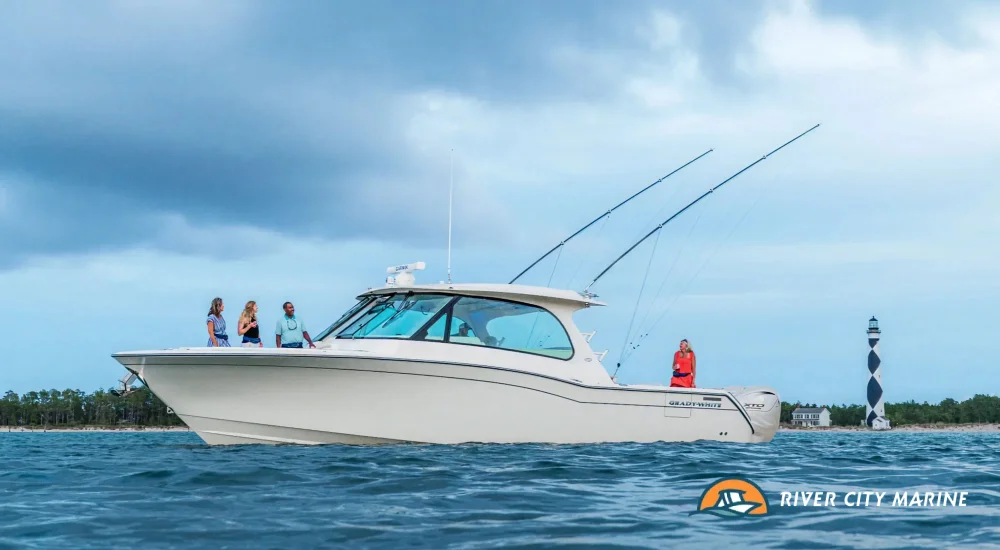
Is Grady-White a good boat? The facts speak clearly. Grady-White has won 23 consecutive National Marine Manufacturers Association Customer Satisfaction Index awards, meaning they have ranked highest in customer satisfaction every year since the award began in 2001.
We see this play out, where Grady-White owners return year after year with minimal issues and strong satisfaction with their boats. The build quality stands out in details, such as hardware made with better materials, clean fiberglass work, and foam flotation that exceeds the minimum requirements. Since 2018, we have represented Grady-White and seen firsthand why these boats earn the loyalty of owners who fish and cruise BC waters regularly. Browse our Grady-White boats for sale to see current models and inventory.
What owners tell us most often:
- SeaV2 hull performance in Georgia Strait chop, where other boats start pounding
- Ride quality that handles rough water without beating you up
- Hardware and finish details that last through saltwater conditions
- Resale values that stay high compared to other brands
- Boats running strong after 10-15 years of regular use
How Grady-White Compares to Other Well-Known Brands
| Brand | Hull Design | Built For | Typical Owner | What Sets It Apart |
| Grady-White | SeaV2 variable deadrise 20-50° | Fishing and family use | Buyers want proven performance | Soft offshore ride, hand-built quality, customer satisfaction ratings |
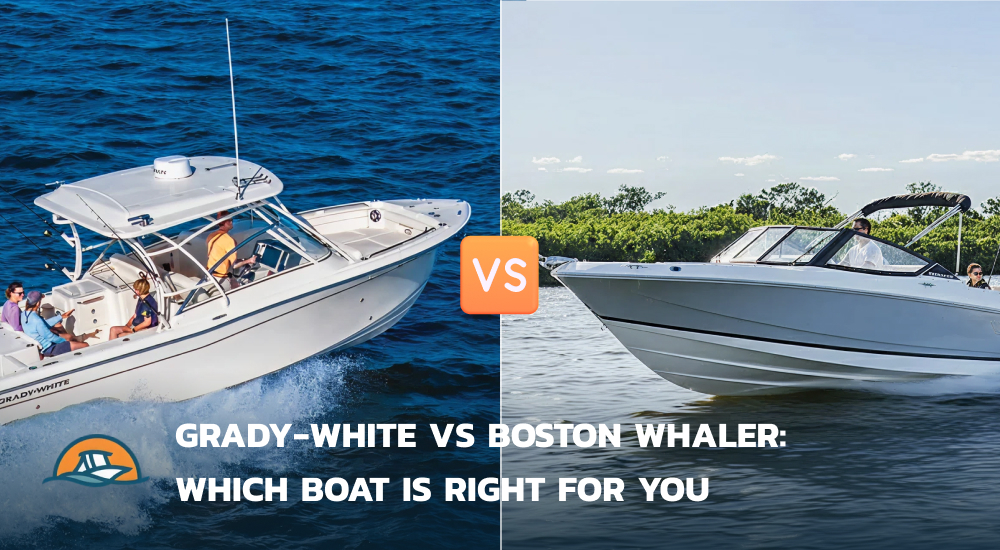
| Boston Whaler | Moderate V with foam core | Safety and versatility | Families, safety-focused buyers | Unsinkable Unibond construction, stability, and broad appeal |
| Regulator | Deep V 24° transom | Serious offshore fishing | Hardcore anglers | Smooth deep-water performance, fishing-focused features |
| SeaVee | Deep V with steps | Speed and efficiency | Performance-minded fishermen | Fast in rough conditions, lighter build, fuel efficiency |
| Pathfinder | Modified V variable | Shallow water fishing | Inshore and flats anglers | Excellent draft, bay-focused design, Gulf popularity |
Choosing the Right Boat for Your Needs
Write down how you actually use a boat. Running offshore twice a month is different from weekend family trips. Tournament fishing needs deck space and storage, while day trips with kids need seating and shade. Count how often each use case happens during your season. Match boat size to realistic needs because a 26-foot boat costs less to maintain and tow than a 32-footer.
Test rides matter. Run at cruise speed to see how it handles waves. Stop and check how much the boat rocks. Move around the deck to test if the layout works for your height and reach. Listen for rattles or flex. Good test rides take at least an hour, even in varying conditions, because calm-water demonstrations can hide problems. Visit our Vancouver location to arrange sea trials on available models. Factor in long-term costs beyond monthly payments, such as insurance, maintenance, fuel, and repairs.
Your Trusted Boat Experts in British Columbia
River City Marine offers Grady-White boats from our Abbotsford showroom. We have been an authorized dealer since 2018. Our team knows British Columbia waters, and we can help our customers match boat features to their actual use. A boat for weekend cruising needs a different setup than one for salmon fishing. We also carry Thunder Jet boats for sale in British Columbia for anglers who need aluminum durability for river and coastal conditions. Reach out to schedule an appointment to discuss your needs.
Resources
- Transport Canada – Buying a Pleasure Craft Access the official government checklist for buying a boat in Canada, including compliance notices and required safety documentation.
- Grady-White Boats – SeaV2® Hull Design See the technical engineering details behind the variable deadrise hull that gives these boats their stability and soft ride in rough water.
- Yamaha Outboards – Performance BulletinsView official fuel economy, RPM, and speed test data for specific Grady-White hull and Yamaha engine combinations.