Buying a boat in BC involves more paperwork than most first-time boat owners expect, and the registration side of things is where many people get tripped up. Part of the confusion comes from the terminology itself. Transport Canada uses the terms licence and registration to describe two completely different processes. Knowing which one applies to your situation before you start the application saves a lot of wasted time. This post walks through what each document is, which one you actually need, what the process looks like in practice, and what changed at the end of 2025 that every BC boat owner should know about.
Licence vs Registration: Understanding the Difference First
The reason so many BC boat owners end up confused is that both documents deal with the boat rather than the operator, and both come from Transport Canada, but they serve completely different purposes. A Pleasure Craft Licence is an identification number assigned to a recreational boat. It works the same way a licence plate works on a vehicle. It does not prove you own the boat it simply puts your vessel into the Transport Canada system with a unique number that must be displayed on both sides of the bow. Formal vessel registration on the other hand, is an ownership record entered into the Canadian Register of Vessels. It establishes that legal title is recognized internationally and is required any time a marine mortgage is involved.
For most BC recreational boat buyers, the Pleasure Craft Licence is what they need. If your boat is powered by an engine or engines totalling 10 horsepower or more and you are not using it commercially, the PCL is the applicable document. Formal registration in the Canadian Register of Vessels is required if the vessel is commercial, if you plan to travel internationally with it or if you are financing the purchase through a lender who needs to record a marine mortgage against the hull. A boat purchased through us and financed through a lender will typically require full vessel registration for exactly that reason. The comparison table below lays out the key differences clearly.
| PLEASURE CRAFT LICENCE (PCL) | VESSEL REGISTRATION | |
| WHAT IS IT | A unique identification number for your recreational boat. Think of it as the licence plate for the vessel | An official ownership record in the Canadian Register of Vessels managed by Transport Canada. |
| WHO NEEDS IT | Any recreational boat powered by an engine of 10HP or more that is not formally registered. | Commercial vessels. Recreational boats with a marine mortgage. Boats traveling internationally. |
| COST | $24.41 per application renewal, transfer or replacement. Updated annually for inflation. | Fees vary depending on the vessel type and application. Generally, more involved than a PCL. |
| VALIDITY | Five years under the new rules, effective December 31, 2025. Must be renewed to stay current. | Does not expire on a set schedule but changes in ownership and status must be reported. |
| WHAT IT PROVES | That your boat is identified in Transport Canada’s system. It is not proof of ownership. | Legal title and ownership. Recognized internationally and required by lenders for marine financing. |
What Changed at the End of 2025
As of December 31, 2025, Transport Canada updated the Small Vessel Regulations to modernize the Pleasure Craft Licence program. Under the old system, PCLs were issued with lifetime validity, which meant the ownership records in the Transport Canada database had become significantly outdated over the decades. In some cases, identifying the current owner of a vessel was taking days, which created real problems for search and rescue operations and for addressing abandoned boats on BC waterways.
Under the new rules, all Pleasure Craft Licences are now valid for five years and must be renewed at the end of each period. A $24.41 service fee applies each time you apply for renewal, transfer, or replacement of a PCL, and that fee will be updated for inflation annually. If your contact information changes, Transport Canada now requires you to update it within 30 days rather than the previous 90-day window. Existing lifetime licences are being gradually phased out rather than cancelled immediately, so if you already hold one, it will be given a specific expiry date between 2026 and 2030 based on when it was originally issued, rather than remaining valid until you move or sell the boat. These changes apply only to the PCL for the vessel. Your Pleasure Craft Operator Card, which is your personal proof of competency to operate a motorized boat, is unchanged and still does not expire.
What Documents Do You Need Before You Apply
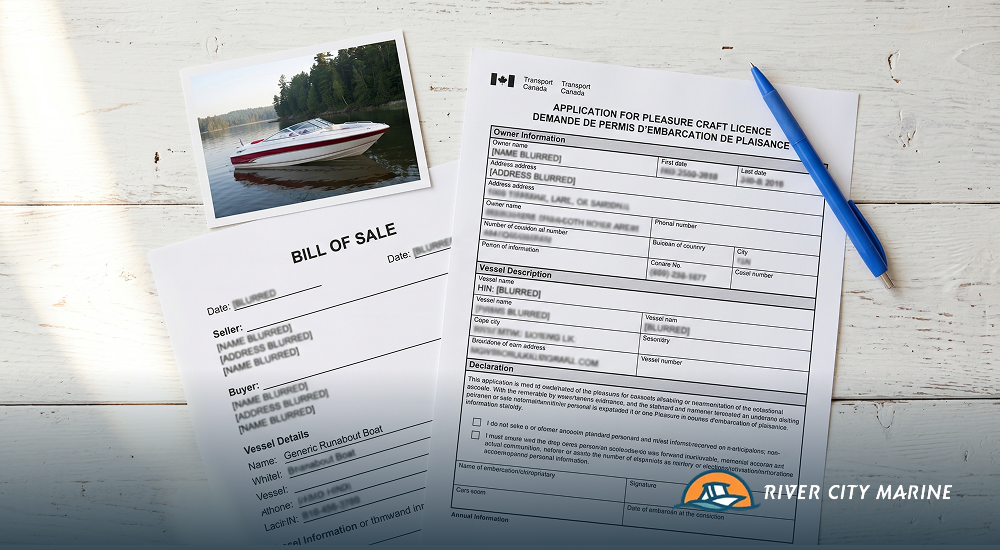
Whether you are applying for a Pleasure Craft Licence or registering the vessel formally in the Canadian Register, there are documents that Transport Canada requires before the application can be processed. Getting these together before you sit down to complete the application is the part most new owners skip and it is what causes delays. The core requirement across both processes is proof of ownership. For a boat purchased from a dealer, this is the bill of sale from the dealership. It needs to include the hull identification number the purchase date the names of both parties and the sale price. A handwritten bill of sale or receipt from a private seller is actually perfectly acceptable and satisfies Transport Canada requirements as long as it contains the names, signatures and vessel details. The documentation needs to be clear, complete and legible.
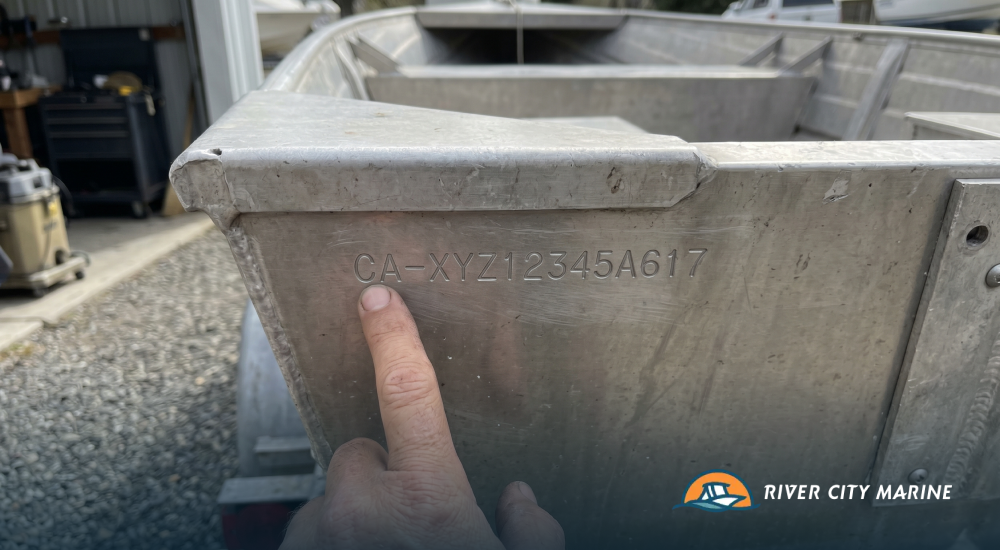
For the PCL application specifically, you will also need a photograph of the vessel that shows the hull clearly, your name and address as the registered owner and the hull identification number. For full vessel registration, the documentation requirements are more involved and include proof of ownership going back through prior registrations if the boat has changed hands before. If you are buying a new boat from us, the hull identification number is on the vessel and can be confirmed with the sales team before you begin the application. If you are buying pre-owned checking that the HIN on the physical hull matches the HIN on the documentation before the purchase completes, is essential because discrepancies between the two create registration problems that are genuinely difficult to resolve after the fact.
How to Complete the Application
Transport Canada handles both PCL applications and vessel registration through their online portal. The PCL process is the more straightforward of the two. You complete the application form, attach your proof of ownership and vessel photograph, pay the $24.41 fee, and submit. Processing times vary, but the licence number is typically assigned within a few days of a complete application being received. Once it is issued, the number must be displayed on both sides of the bow above the waterline in block letters at least three inches high that contrast clearly with the hull colour. The PCL document itself must be kept on board at all times when the boat is in use.
Full vessel registration through the Canadian Register of Vessels takes longer and involves more documentation review by Transport Canada. If you are registering a financed vessel, your lender will typically have specific requirements around the timing of the registration relative to when the mortgage is recorded, so coordinating with them before you submit the application avoids having to redo steps. The registration process results in an official Certificate of Registry that identifies the vessel, its owner, and any encumbrances recorded against it. That certificate needs to be on board whenever the boat is operating, just as the PCL does for licensed vessels.
Where the Abbotsford Team Can Help
Buying a new boat involves a lot of paperwork, but having a dealer who knows the process makes it easy. Our team handles your Transport Canada bill of sale and guides you through the exact registration path you need. If you need a loan, our boat financing page explains the whole process and we help you gather the specific documents your lender requires. Beyond the boat paperwork, you also need to make sure you are legally allowed to drive. If you want to know how to get a BC boating licence and what to expect on the test, our guide explains everything you need to hit the water.
Trading in an old boat requires paperwork too. You must transfer or cancel your old PCL before closing the deal and our trade-in page explains exactly what to bring. If you are still searching for the right boat, check out our new boats inventory and boats for sale pages to see the Grady White and Thunder Jet models we currently have on the lot.
Sources