Most people discover the BC boating license requirement after they have already purchased the boat. A friend mentions it, or the dealership brings it up at signing and suddenly there is one more thing to sort before the first launch. The reality is that the Pleasure Craft Operator Card (PCOC) takes a few hours to earn, costs less than a tank of fuel and once you have it, it is yours for life. Knowing what the requirement actually involves before you start the process makes the whole thing considerably less intimidating than it sounds.
What the BC Boating License Actually Is
The term’ boating license’ is used loosely across BC, but the official document Transport Canada requires is called the Pleasure Craft Operator Card, abbreviated as PCOC. It is a federally issued proof of competency, which means there is no separate BC version and no provincial top-up required. The same card covers you on the Fraser River on the Strait of Georgia, on Vancouver Island coastal waters and anywhere else in Canada you choose to take the boat. It is also recognized in the United States, which matters for buyers who run the San Juan Islands or cross into Washington State waters.
The card does not expire, but your right to operate a boat can absolutely be suspended or revoked by the courts if you are convicted of major offenses like impaired driving on the water. It does not come in different classes based on vessel size or engine output. Once you pass the Transport Canada boating safety test through an accredited provider, you hold the same PCOC that covers a 14-foot aluminum river boat and a 34-foot express cruiser alike. There are no renewals, no upgrades and no annual fees attached to it. From a paperwork standpoint, it is one of the cleaner requirements in all of boat ownership.
Who Is Required to Carry One
The requirement is straightforward. Anyone who operates a motorized vessel on Canadian waters needs to carry a valid PCOC on board at all times when the boat is underway. That applies regardless of engine size or hull length. A 9.9HP kicker mounted on a 16-foot aluminum boat carries the same legal weight as a 350HP outboard setup on an offshore center console. There is no horsepower threshold below which the rule does not apply and there is no exemption based on how short the trip is or how close to shore you plan to stay.
Non-residents visiting Canada with their own vessel for fewer than 45 consecutive days are not required to carry a PCOC, provided they carry proof of competency from their home country. Operators in Nunavut and the Northwest Territories are also exempt. Outside of those specific situations, if you are a BC resident buying and operating a boat on Canadian water, you need the card. The physical original must be on board whenever the vessel is moving. A photocopy will not satisfy a transport officer and operating without the original card in BC carries a minimum fine of $250.
How to Get Your PCOC?
Transport Canada does not run the boating safety course or the test directly. They accredit private providers to deliver both and the entire process runs online. BOATsmart, BOATERexam and CanadaBoatSafety are among the most widely used accredited providers in BC. Each one sets its own pricing and structures its course material slightly differently, so spending a few minutes comparing them before you register is worthwhile. The course content they cover is standardized by Transport Canada regardless of which provider you choose.
The course is organized into five chapters and each chapter ends with a quiz that requires at least 80% to move forward. Transport Canada sets the minimum time to complete the full course at three hours, though most people working through it carefully take longer. After you finish the course, you access the final Transport Canada Boating Safety Test. It is 50 multiple-choice questions open book meaning you can refer back to your course material while answering. The pass mark is 75%, which is 38 correct answers out of 50. Most accredited providers include unlimited retries so there is no penalty for working through the material a second time before trying again.
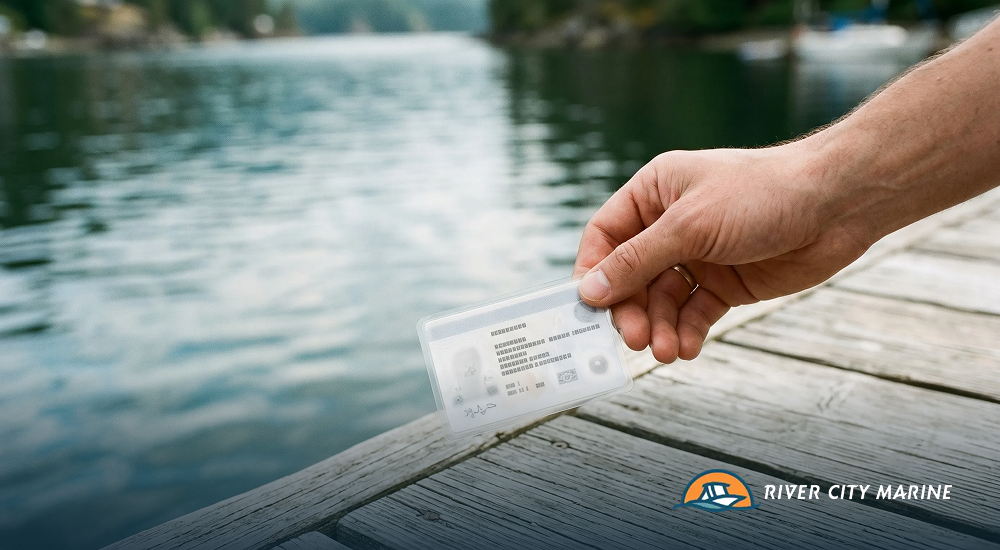
Once you pass, you can download and print a temporary PCOC immediately and the boat is legal to operate that same day. The permanent laminated card arrives by mail within approximately four weeks. There is no minimum age requirement to take the test and earn the card but youth under sixteen face strict horsepower limits and are legally banned from operating personal watercraft like Sea Doos. A 14-year-old receives the same card as a 55-year-old, but they absolutely cannot drive the same high-powered boats without an adult directly supervising them on board.
What the Test Actually Covers
The five knowledge areas below make up the full scope of the Transport Canada boating safety test. The questions are designed to test real understanding of on-water situations, not the ability to memorize specific figures. Because the test is open-book, the focus is on knowing where to find the right answer in your course material and understanding what it means when you are actually on the water.
| TOPIC AREA | WHAT IT COVERS |
| Boat Safety Equipment | Life jackets, flares, fire extinguishers, sound signals and navigation lights. The test covers what each item is, when to use it and how to keep it in working order before every trip. |
| Rules of the Road | Right of way between vessel types, how to pass other boats safely, the 10km/h speed limit within 30 metres of shore and restricted zones under the Vessel Operation Restriction Regulations. |
| Safe Boating Practices | Reading weather before departure, operating in poor visibility, managing passengers responsibly, and the legal and practical consequences of alcohol on the water. |
| Navigation Basics | Reading nautical charts, understanding buoys and channel markers, and moving safely through waterways. This section does not require expert-level skills to pass. |
| Emergency Procedures | Man overboard response, capsized vessel protocol, how to use distress signals correctly, and the right sequence for calling for help on the water. |
What to Sort Out After You Pass
Your PCOC gives you the legal green light to drive the boat, but you still have two more steps to clear before your first launch. The next big hurdle is your Transport Canada paperwork. Sorting out boat registration in BC catches a ton of first-time buyers off guard if they wait until the week they want to hit the water. After the paperwork comes boat insurance. The government does not force you to have it, but lenders and marinas will definitely ask for proof of coverage. If you are still putting together your budget, our boat financing page walks you through exactly how getting a loan actually works.
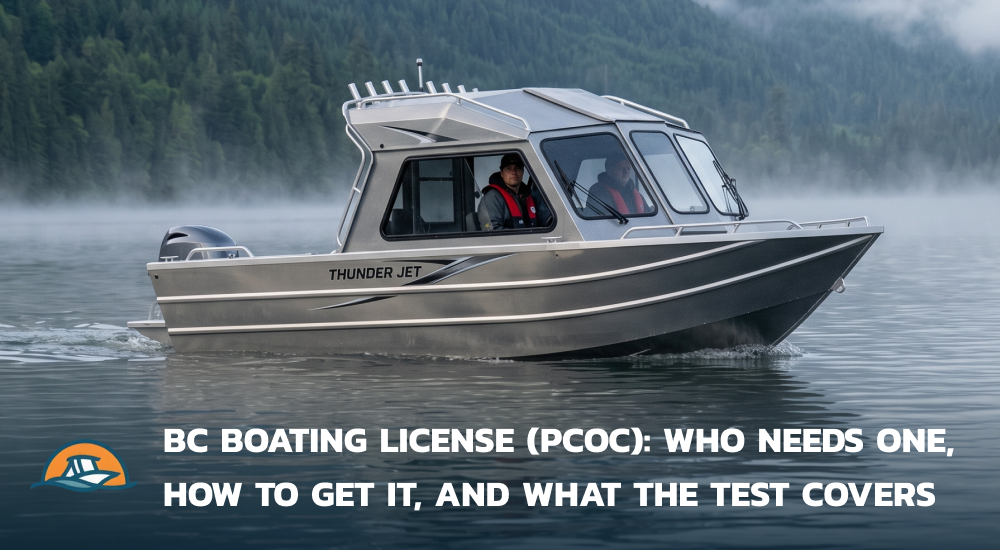
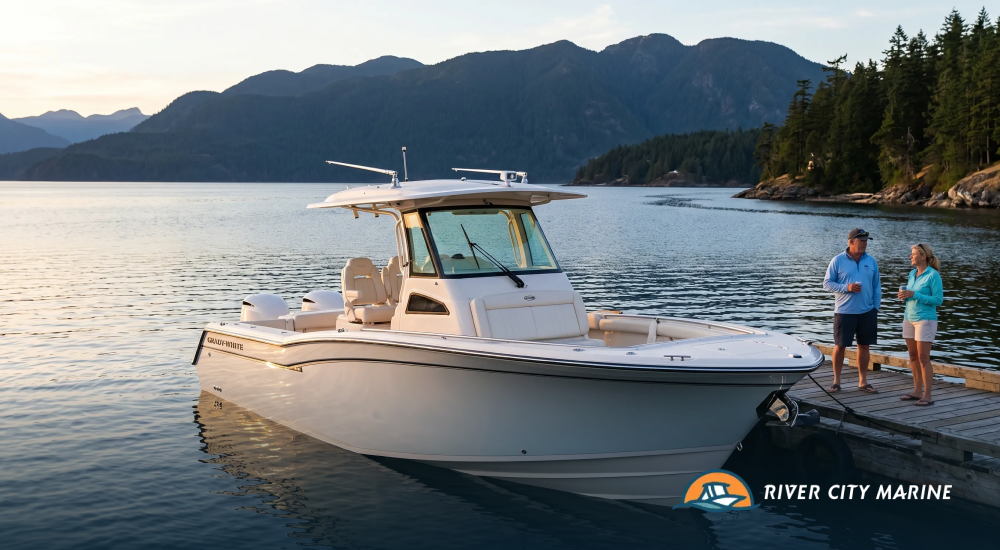
Once you knock out the paperwork and insurance, you can focus entirely on picking a boat that handles the specific lakes or coastal waters you want to explore. Our Abbotsford team has been matching buyers with the right hull and engine setups since 2013. You can check out our current boats for sale online to see the Grady White fiberglass and Thunder Jet aluminum boats we have on the lot ready to go.
Sources
https://tc.canada.ca/en/marine-transportation/preparing-operate-your-vessel/visitor-information