There is no single best fishing boat for freshwater. The right one depends on the size of the water, the species you are after, and how often the boat lives on a trailer versus at a dock. A 14-foot aluminum is plenty for a stocked trout lake. A jet boat is what you want for the Fraser. Most anglers land somewhere in between.
British Columbia has over 20,000 lakes and 750,000 kilometres of waterways, and the species you are most likely to chase across all of them are trout, kokanee, salmon, sturgeon, and steelhead. Bass is a smaller piece of the picture here than it is south of the border, which matters when you are sorting through boat options.
The breakdown below covers the seven boat types that actually make sense for BC freshwater, including jet boats, which most other guides leave out entirely.
1. Aluminum Jet Boats
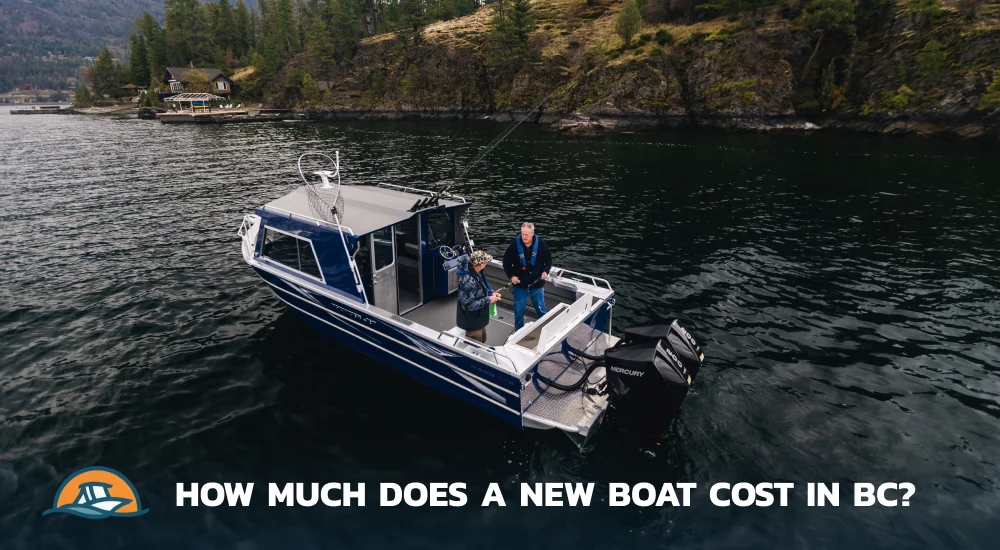
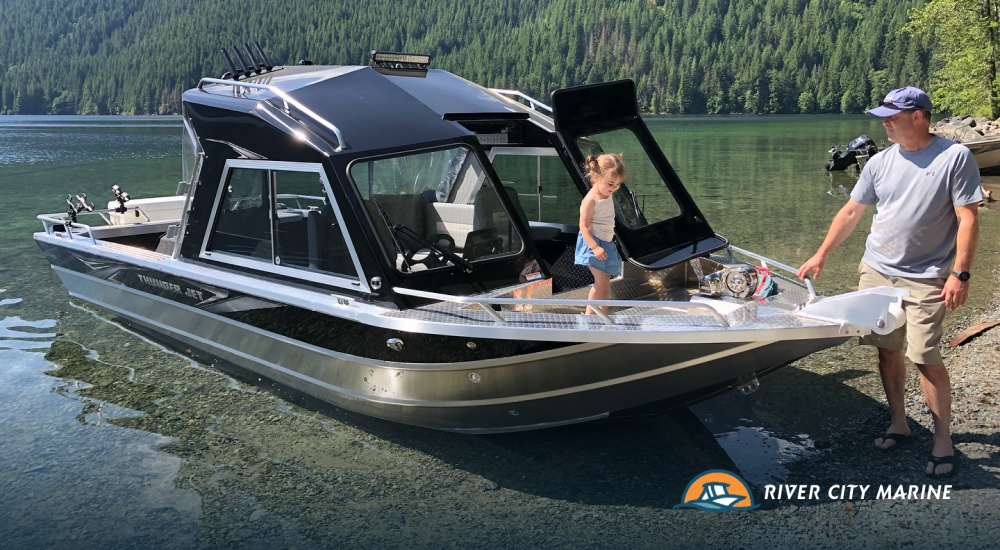
Jet boats are built for shallow rocky rivers like the Fraser, the Thompson, and the Skeena, where a propeller would not last a season. The jet pump replaces the prop, so the boat runs in inches of water and survives gravel bars that would shred a regular outboard.
Jet drives burn more fuel than props and the bottoms wear faster. For river anglers chasing sturgeon, salmon, or steelhead, no other boat type comes close. The Thunder Jet lineup is the brand most BC river anglers know, with welded aluminum hulls built specifically for these conditions.
2. Bass Boats
Bass boats are the most specialized fishing boats made. Low-profile fiberglass hull, large casting decks at bow and stern, big main outboard plus a bow-mounted electric trolling motor. They are fast, they hold position with electric motors better than any other boat, and they put two anglers exactly where they need to be on a tournament-style fishing day.
The catch in BC is that bass is a smaller part of the picture than it is south of the border. Bass boats fit on parts of the Okanagan, the Kootenays, and a handful of stocked southern lakes that hold real bass populations. They are an awkward fit for trout lakes, alpine fishing, or river work.
3. Aluminum Fishing Boats
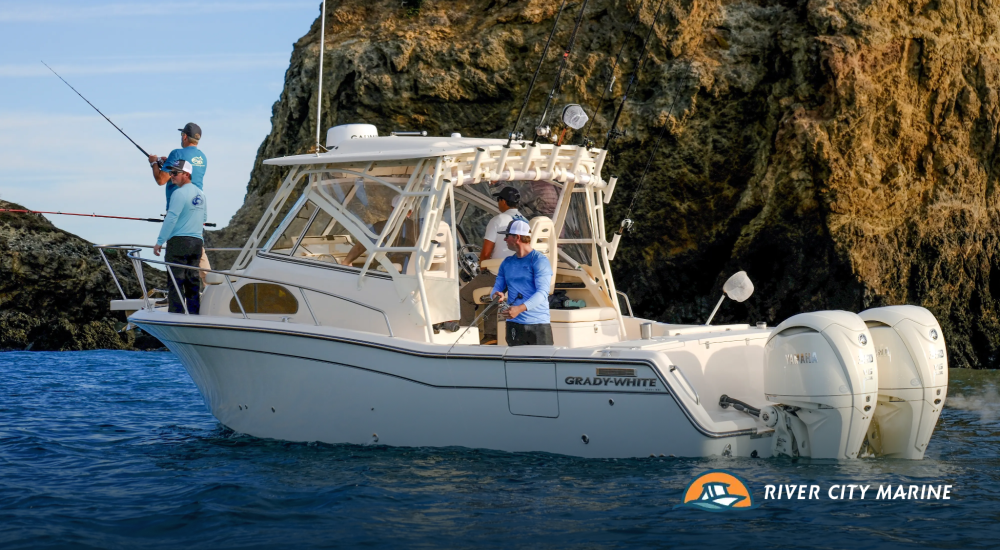
Aluminum fishing boats are the most common choice for freshwater anglers in BC because they are tough, lightweight, and easy to handle. They can withstand hits from rocks, logs, and rough shorelines with minimal damage, making them ideal for smaller lakes and everyday fishing. They are also easy to trailer, affordable to run, and work well for beginners as well as experienced anglers. We carry a strong lineup of boats that fit different fishing needs, including rugged Thunder Jet models for tougher conditions, along with a good lineup of Grady-White fishing boats for those looking at higher-end options or saltwater crossover use.
4. Pontoon Fishing Boats
Pontoons are the right answer when the trip is half fishing and half hanging out. Stable, lots of deck space, easy for groups, and modern fishing pontoons come standard with livewells, rod holders, and trolling motor mounts.
They do not like wind or chop, they are slow, and they do not trailer as easily as a smaller aluminum. They are not the right boat for serious cold-water trout fishing on a big, windy lake. On Shuswap arms, smaller summer lakes, and warm-water family fishing days, they make a lot of sense.
5. Multi-Species and Walleye Boats
Multi-species boats are the all-purpose answer for anglers who fish more than one way. Aluminum or fiberglass, 17 to 21 feet, deep-V or modified-V hull, console layout with rod storage, livewells, and room for a bow trolling motor. The Lund Tyee, Princecraft Holiday, and Alumacraft Trophy are good examples of the format.
They do not specialize the way a bass boat does. What they offer is range. They handle big inland water like Shuswap, Okanagan, Kootenay, and Williston without complaint, and they cover both casting and trolling without asking the angler to compromise. Most BC owners pair them with a small Mercury kicker for trolling.
6. Walkaround and Pilothouse Boats For Big Inland Water
Walkaround and pilothouse boats show up on the very largest BC inland lakes, places like Williston, Kootenay, and the bigger arms of Shuswap. These boats give up shoreline access and shallow-water capability in exchange for an enclosed cabin, weather protection, and a deeper hull that handles the chop you get when wind builds across 20 kilometres of open water.
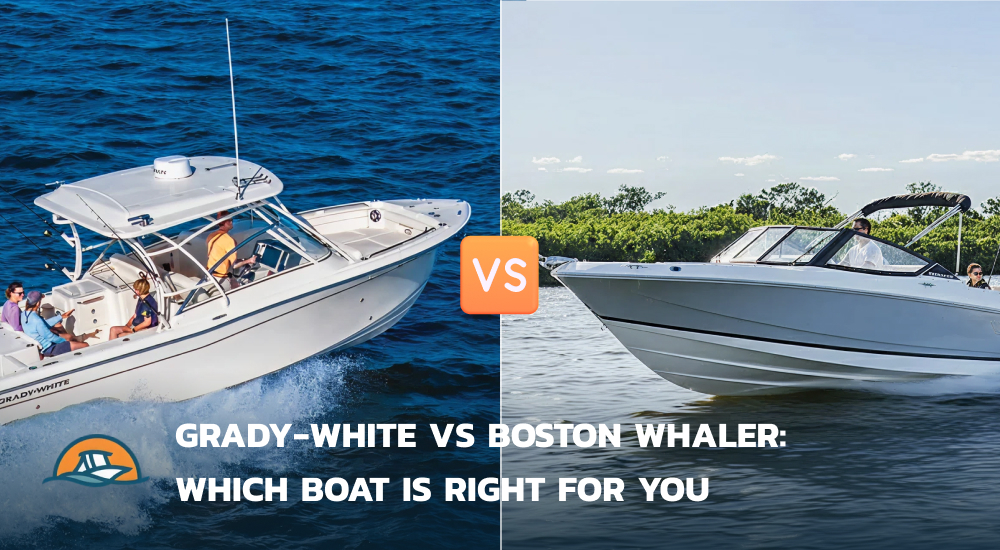
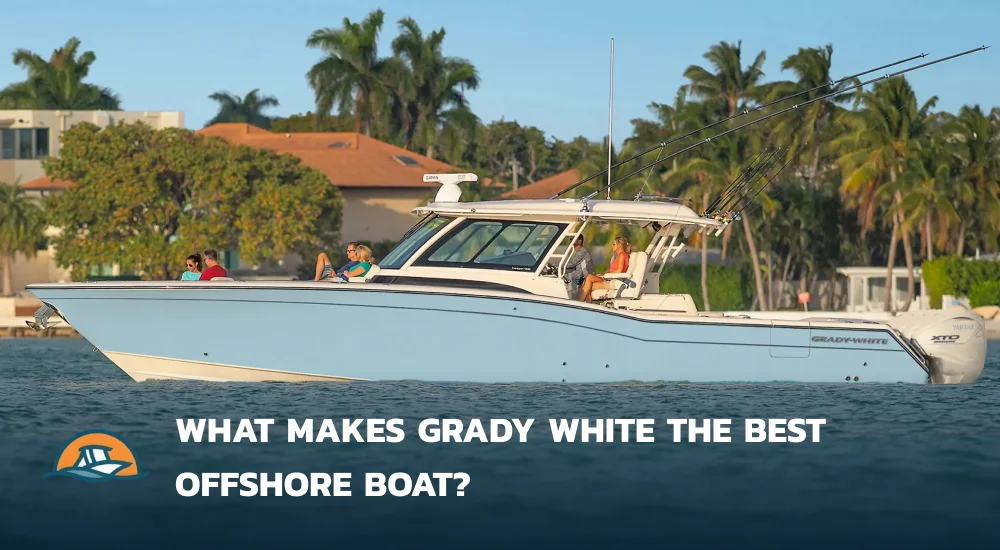
Most are saltwater boats borrowed for inland use. Anglers who fish both the strait and the lakes sometimes run a smaller Grady-White or similar fiberglass walkaround as a one-boat answer. Not the right boat for trout lakes or rivers, but the right one when the lake is big enough to feel like the ocean.
7. Fish-and-Ski Crossovers
Fish-and-ski boats are the compromise hull. Usually 17 to 22 feet, dual console layout, fiberglass or aluminum, with fishing features like livewells and rod holders worked into a runabout that can also pull a tube.
They are not as good at fishing as a bass boat and not as good at watersports as a dedicated runabout. The point is that they cover both, and for plenty of BC families with one boat budget, that is the right answer. They make the most sense on mid-size lakes where the boat is doing several jobs in a season.
Match the Boat to Your Water
Pick the water first, and the boat decision narrows down on its own. Small interior trout lakes call for a small aluminum. Big inland water calls for a multi-species or a walkaround. Rivers call for a jet boat. Family lakes with mixed use call for a pontoon or a fish-and-ski. Once the format is sorted, the brand and size questions get a lot easier to answer.
River City Marine carries Thunder Jet for the river and big-water side of the freshwater market, and Grady-White for the saltwater and crossover side. Worth seeing the boats in person before you commit to one. The way the rod holders sit, how the trolling motor mounts, and how the trailer feels behind your tow vehicle are all things you only learn from walking through the boat.
Stop by the Abbotsford showroom if you want to talk through the freshwater options, or look at the used boats we have on the lot if a slightly older boat at a lower price point is the right fit.
Frequently Asked Questions
What size boat is right for a first-time freshwater angler in BC?
For most beginners fishing small to mid-size BC lakes, a 14 to 16 foot aluminum boat with a 25 to 60 HP outboard is the right starting point. Easy to trailer, easy to launch alone, low fuel cost, and big enough to handle most stocked lakes safely. Step up to 17 to 18 feet if you plan to fish bigger water like Shuswap or the Okanagan.
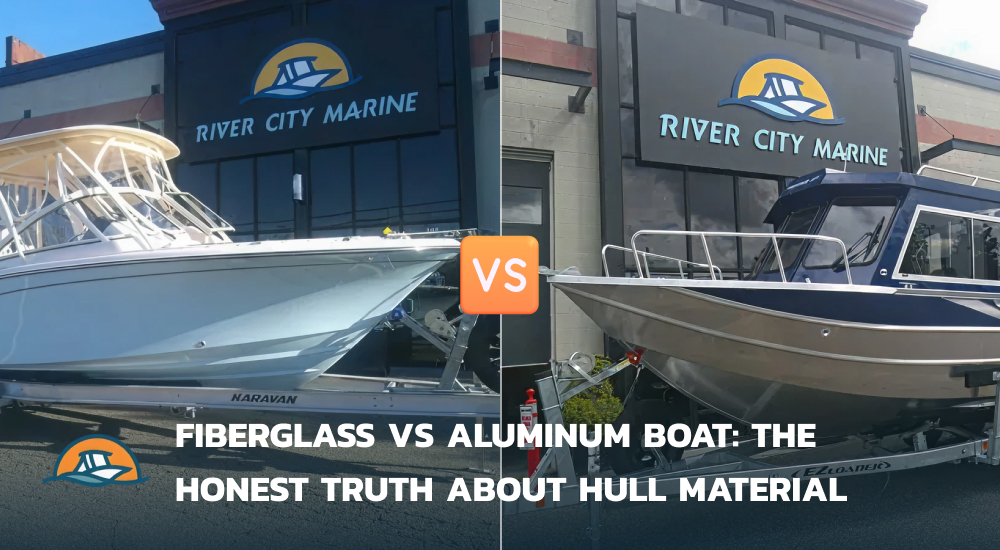
Aluminum or fiberglass for freshwater fishing?
Aluminum wins on durability, maintenance, weight, and price. Fiberglass wins on ride quality and quietness on the water. For BC freshwater specifically, aluminum is the more common pick because it handles rocks, logs, and shoreline beaching better, and most freshwater anglers care more about the boat lasting twenty seasons than they do about a slightly softer ride.
What is the best boat for fishing the Fraser River?
A welded aluminum jet boat. The Fraser is shallow in places, fast-moving, full of gravel bars, and home to the white sturgeon fishery that pulls a lot of BC anglers onto the river. A 20 to 24 foot Thunder Jet or similar welded aluminum jet boat with a hardtop is the format that handles those conditions without eating propellers every season.
Should I buy new or used for my first fishing boat?
Used is usually the smarter call for a first boat. You take the depreciation hit the original owner already paid for, you can get more boat for the same money, and most freshwater fishing boats hold up well if they were stored properly. Look for clean welds, no soft spots in the floor, a recent outboard service record, and a trailer that is not falling apart.