Where to Start and What to Expect from Sports Fishing in BC
British Columbia has over 20,000 freshwater lakes, thousands of kilometres of rivers, and an entire Pacific coastline. Sports fishing in BC is not one thing. It is a dozen different fisheries spread across wildly different waters, and the rules change depending on where you drop a line. Fisheries and Oceans Canada regulates tidal (saltwater) fishing, while the provincial government handles freshwater. That split matters because you need different licences, follow different catch limits, and deal with different enforcement depending on the water you are standing in.
The targets here range from Pacific Salmon and halibut on the coast to Rainbow Trout in Interior lakes and white sturgeon in the Fraser River. Around 300,000 licence holders fish BC tidal waters alone. Year-round fishing is possible depending on where you go and what species you are after, but timing is everything. Show up at the wrong time, and you will be casting into empty water. This guide covers the fishing environments, the best spots, how to get licensed, what you can and cannot keep, and when to go.
Recreational Fishing vs Commercial Operations
SPORT FISHING IS FOR PERSONAL USE ONLY
Sport fishing in British Columbia is recreational. It is not a commercial operation. You fish for personal use, you follow catch limits, and you do not sell what you catch. That line is clear in the regulations and it gets enforced. The fishery covers both tidal and non-tidal waters across the province, and approximately 300,000 anglers hold tidal licences in any given year.
THE TWO SYSTEMS
- Freshwater lakes and rivers fall under the provincial government. The Freshwater Fisheries Society of BC manages stocking programs and conservation
- Saltwater and tidal areas fall under Fisheries and Oceans Canada (DFO). They set the seasons, catch limits, and closures for ocean species
- Catch and release is mandatory for certain species, especially white sturgeon
- Rules change by region, season, and species. What is legal in one management area can be banned in the next one over
- Ignorance of the regulations is not a defence. Conservation officers issue fines on the spot
| WATER TYPE | REGULATING BODY | COMMON TARGETS |
| Non-tidal (Freshwater) | Province of BC | Rainbow Trout, Bull Trout, Kokanee, Lake Trout |
| Tidal (Saltwater) | Fisheries and Oceans Canada | Pacific Salmon, Halibut, Lingcod, Rockfish |
| Fraser River (Sturgeon) | Province of BC | White Sturgeon (catch and release only) |
Not knowing the rules will cost you fines and headaches. Check the regulations before every trip because they change mid-season.
Three Types of BC Fishing Water
1. FRESHWATER FISHING IN LAKES
BC has thousands of stocked and wild trout lakes, and most of them see very little pressure compared to coastal fisheries. Rainbow Trout is the bread and butter species across the Interior, with fish commonly running 2 to 5 pounds and trophy lakes like Dragon Lake near Quesnel producing fish over 10 pounds. Lake fishing peaks from May through September, and most lakes have some form of boat launch access. Many Fraser Valley and Interior lakes are reachable with a truck and a trailered aluminum boat.
2. RIVER FISHING
The Fraser River is the big one. It runs over 1,375 kilometres through the province and hosts one of the largest white sturgeon populations on the planet. Sturgeon fishing is strictly catch and release, and the fish can run anywhere from 4 to 10 feet long. The season runs from March to November, with the best action in the fall when sturgeon feed on salmon runs. Beyond sturgeon, the Fraser carries Chinook, Coho, Chum, Pink, and Sockeye Salmon at different times of year. River conditions change fast. Current water levels and visibility all matter, and seasonal closures can shut down sections with almost no warning.
3. SALTWATER FISHING ON THE COAST
The Pacific coast of British Columbia is where the halibut and salmon fishing happens at scale. Vancouver Island, Haida Gwaii, and the central coast all produce serious catches. Pacific Salmon (Chinook, Coho, Sockeye) and halibut are the main draws, with Lingcod and rockfish rounding things out. Tidal conditions, weather windows, and DFO management area rules all dictate when and where you can fish. You need a boat rated for open ocean conditions or a spot on a charter. This is not lake fishing.
| ENVIRONMENT | WATER CONDITIONS | Saltwater-rated boat, downriggers, safety gear |
| Freshwater lakes | Calm, sheltered, warm in summer | Small aluminum boat, trolling or fly rod |
| Rivers (Fraser) | Fast current, murky, variable depth | Jet boat or guided drift, heavy tackle |
| Saltwater coast | Open ocean, tidal, exposed | Saltwater rated boat, downriggers, safety gear |
Five Spots Worth Fishing in British Columbia
1. THE FRASER RIVER
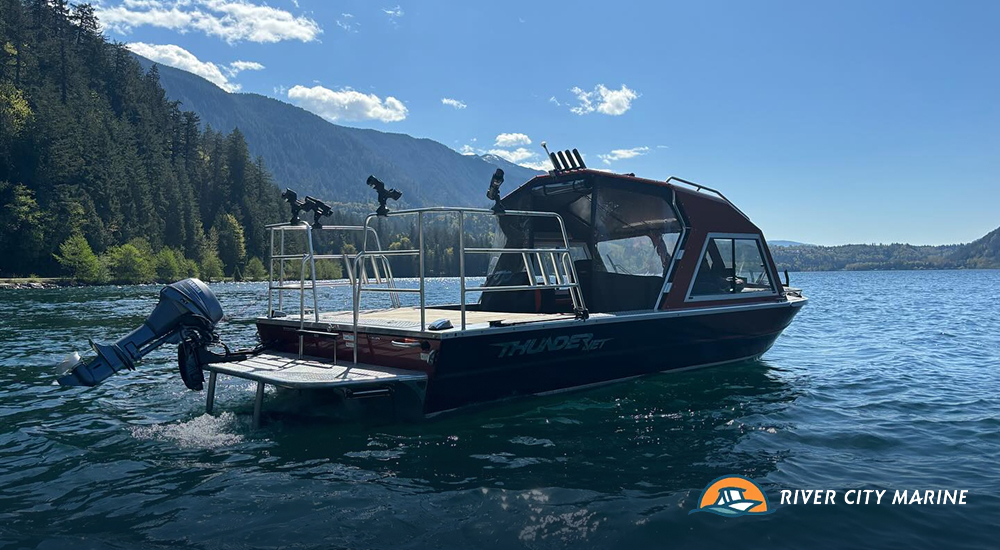
The Fraser is where you go for white sturgeon. Mission, Chilliwack, Agassiz, and Hope are the main launch points, and most serious anglers hire a guide with a jet boat. Sturgeon fishing runs year-round but peaks from September through November when salmon runs bring the big fish to feed. The Fraser also produces Chinook and Coho Salmon in season, plus Steelhead in winter. The currents are strong, and the water is fast, so this is not a beginner river without a guide.
2. VANCOUVER ISLAND COAST
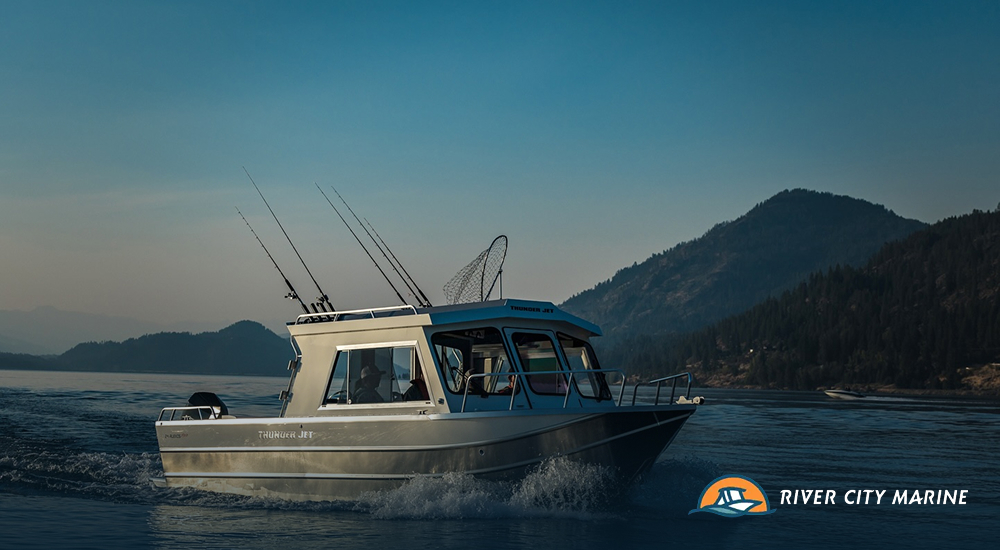
The west coast of Vancouver Island is a saltwater fishing destination that draws anglers from around the world. Chinook Salmon, Coho, halibut, and Lingcod are all in play depending on the season. Towns like Tofino, Ucluelet, Campbell River, and Port Hardy have marinas and charter operations running from spring through fall. The water is the open Pacific Ocean, so boat size and safety gear matter. The weather can shut you down for days at a time.
3. OKANAGAN LAKES
Okanagan Lake and the surrounding smaller lakes produce consistent trout fishing through the warmer months. Rainbow Trout and Kokanee are the main species. Boat launches are plentiful and the access is some of the easiest in the province. Summer is the busiest season and the fishing stays productive from May through October. The Okanagan is a good choice for anglers who want a fishing trip without the logistical burden of remote access.
4. THE KOOTENAY REGION
The Kootenays sit in southeastern BC and produce some of the province’s best freshwater fishing with almost none of the crowds. Bull Trout, Rainbow Trout, and Kokanee are the targets. Lakes like Kootenay Lake grow large Bull Trout that can run over 20 pounds. The rivers and streams here are cleaner and slower than the Fraser, and the surrounding country is about as remote as it gets in southern BC. This is a region where you can fish all day without seeing another angler.
5. THE CARIBOO LAKES
Highway 24 between Little Fort and 100 Mile House is called the Fishing Highway for a reason. The Cariboo region has over 8,000 lakes and trout fishing is the draw. Sheridan Lake, Bridge Lake, Dragon Lake, and dozens of smaller waters produce Rainbow Trout, Kokanee, and Lake Trout. The region has a backcountry feel and the resorts along Highway 24 cater to anglers. Skill level does not matter much here because the variety of water means there is something for everyone, from fly fishing in small bays to trolling on larger lakes.
| LOCATION | PRIME SPECIES | BEST SEASON |
| Fraser River | White Sturgeon, Chinook Salmon | September to November |
| Vancouver Island coast | Chinook, Halibut, Lingcod | May to September |
| Okanagan lakes | Rainbow Trout, Kokanee | May to October |
| Kootenay region | Bull Trout, Rainbow Trout | June to October |
| Cariboo lakes (Hwy 24) | Rainbow Trout, Lake Trout | May to September |
When to Fish in BC
- Summer (June to September) delivers the easiest access across every type of water. Lake fishing is at its best. Saltwater salmon seasons open up. The Fraser River salmon runs start building. This is when most anglers are on the water, and for good reason.
- Fall (September to November) is the peak time for Fraser River sturgeon fishing and late-season salmon returns. Coho and Chum runs hit the rivers. The coastal fishery starts winding down but fall is when the biggest sturgeon get caught. Fewer people are fishing, so the water is less crowded.
- Spring (March to May) is when freshwater lakes start opening up as ice comes off. Sturgeon fishing picks up on the Fraser in April when eulachon enter the river. Tidal fishing is limited early but expands as the season progresses.
- Winter (December to February) is the slowest season. Steelhead fishing on select rivers is the main draw. Ice fishing happens on Interior lakes. Coastal fishing is largely shut down by the weather. Timing the tides is just as important as the calendar month for any saltwater trip.
Find the Right Fishing Boat at River City Marine
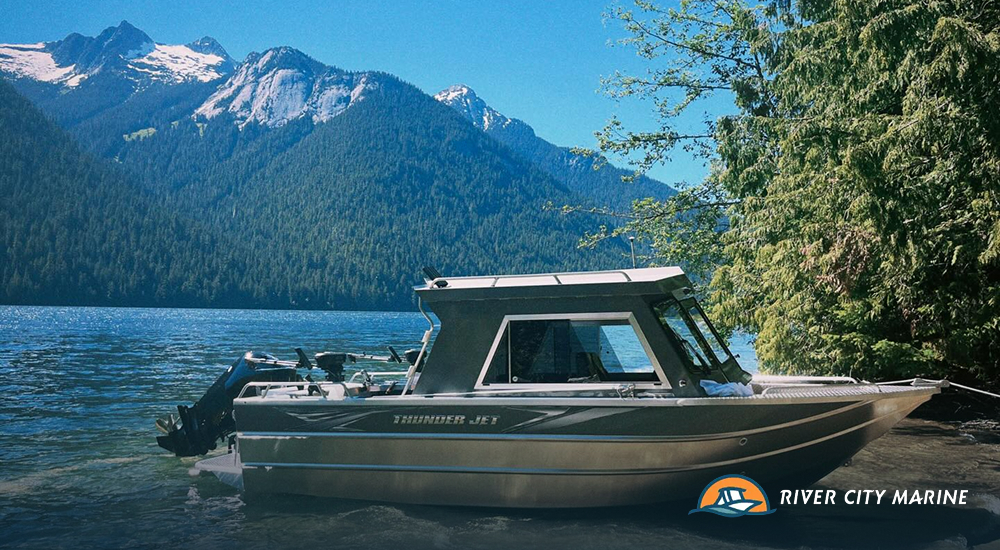
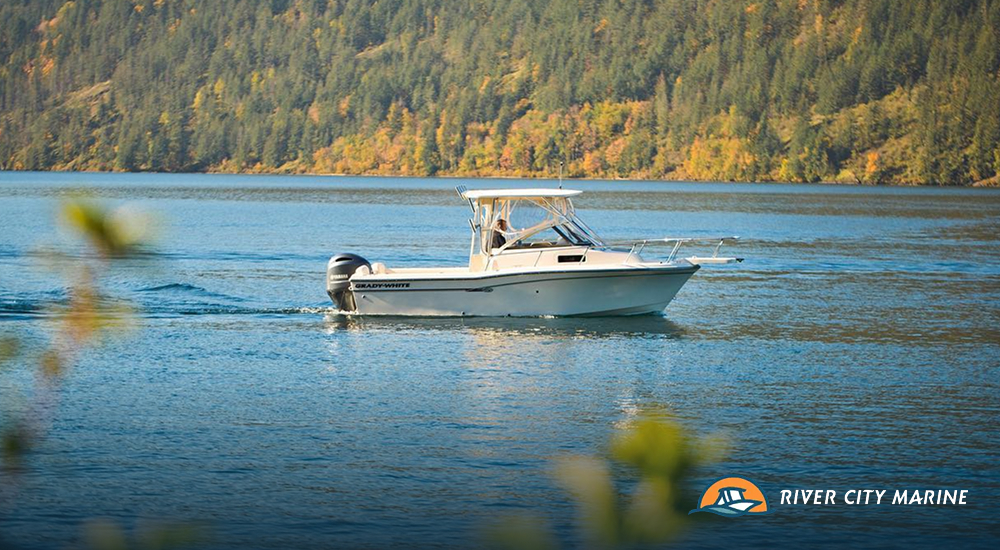
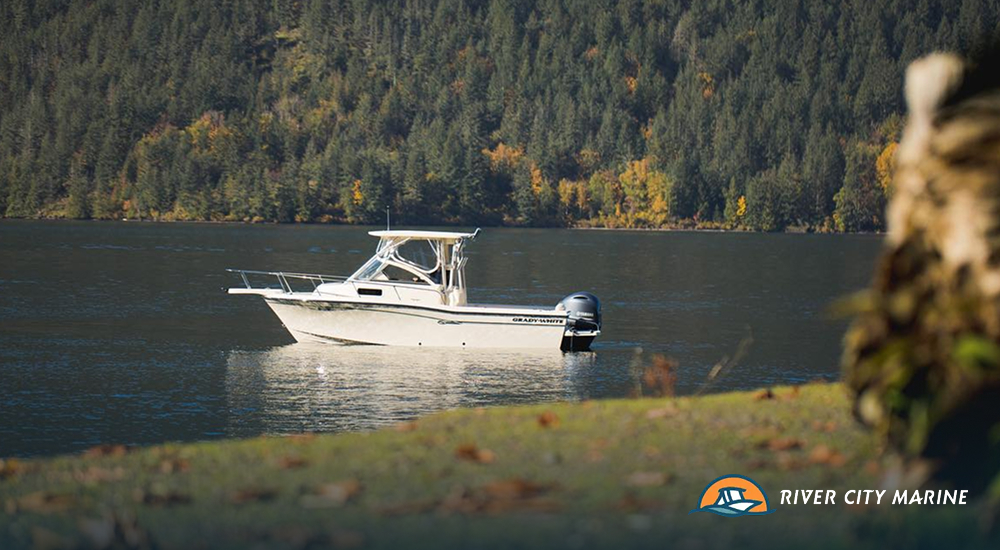
BC fishing puts different demands on a boat depending on where you go. Running sturgeon bait on the Fraser in November is a completely different game than trolling for Chinook off Campbell River. We sell Thunder Jet aluminum boats that handle river current, gravel launches, and shallow bars. We also sell Grady-White fiberglass boats that are built for open saltwater and can take Pacific swells without beating you up all day.
We are based in Abbotsford and most of our customers fish the same waters covered in this guide. If you are trying to figure out what hull and motor pairing makes sense for the fishery you want to hit, come talk to us